
Decision guide · Built-in economics
Should you repair or replace your Sub-Zero in Petaluma?
Most built-in Sub-Zeros in Petaluma are worth repairing, because a new unit plus install and cabinetry rework is a major project — but not every one. The honest call depends on the confirmed fault, the unit's age, OEM part availability, and how much your cabinetry would suffer in a swap. We diagnose on the unit, confirm by model and serial, and give you a repair estimate and a plain replacement read side by side. Hosting deadlines, hot inland afternoons and wine-zone stability all factor in. Book online or call (628) 209-6820.
Why this question comes up in the first place
It usually starts small. A Sub-Zero owner in Petaluma calls because the ice maker has gone slow, jammed, or is producing hollow cubes — the kind of thing easy to live with until a weekend of guests arrives and the freezer can't keep up. In newer builds around Liberty Valley, where open kitchens host big gatherings, that one nagging symptom is often what makes someone wonder whether the whole unit is on its way out. It rarely is. A hollow-cube or slow-fill complaint is frequently a water-inlet valve, a fill-tube frost line, or a module fault — bolt-on OEM parts, not a reason to replace a working built-in. The repair-vs-replace question is worth asking, but it deserves a real diagnosis before anyone reaches for a catalog.
The harder version of the same question shows up with wine. When a wine column drifts several degrees, the storage zone you set at, say, 55°F slowly creeps warmer or runs cold and swings — enough to worry anyone keeping bottles for the long term. In plain terms, the unit has lost its grip on a steady temperature. Diagnosis confirms it by logging the actual zone readings over time, checking the thermistor against its expected values, watching the evaporator fan and defrost behavior, and reading any control-board state. What we cannot know before inspection is whether the cause is a cheap sensor, a failing fan, a refrigerant issue, or a board fault — and those four answers point to very different repair costs. That uncertainty is exactly why we won't quote a repair-or-replace verdict over the phone.
The decision matrix we actually use
Once the fault is confirmed, we score the call across six factors. None decides it alone; together they show whether the unit leans repair or leans replace. Use this to frame your own thinking before the visit.
| Factor | Leans repair | Leans replace |
|---|---|---|
| Unit age | Well-kept unit, fault is the first major issue | Older unit with several systems aging together |
| Cabinet / remodel impact | Existing surround fits a like-for-like fix or swap | New model size or panel system forces cabinetry rework |
| OEM part availability | Fan, gasket, valve or board revision in stock for the serial | Discontinued part with no verified OEM substitute |
| Safety | Isolated, documented fault with no heat or electrical damage | Repeated electrical fault, connector heat damage or contaminated sealed system |
| Repair cost | Airflow, fan or gasket work well under unit value | Major sealed-system plus compressor on an already-tired unit |
| Replacement disruption | Repair keeps a working cabinet and counter intact | Swap is straightforward and a remodel is already planned |
In practice, a single "leans replace" row rarely settles it — a discontinued part, for instance, can sometimes be sourced refurbished. It's the pattern across rows that matters, which is why we score all six rather than reacting to one bad symptom.
What the evidence looks like
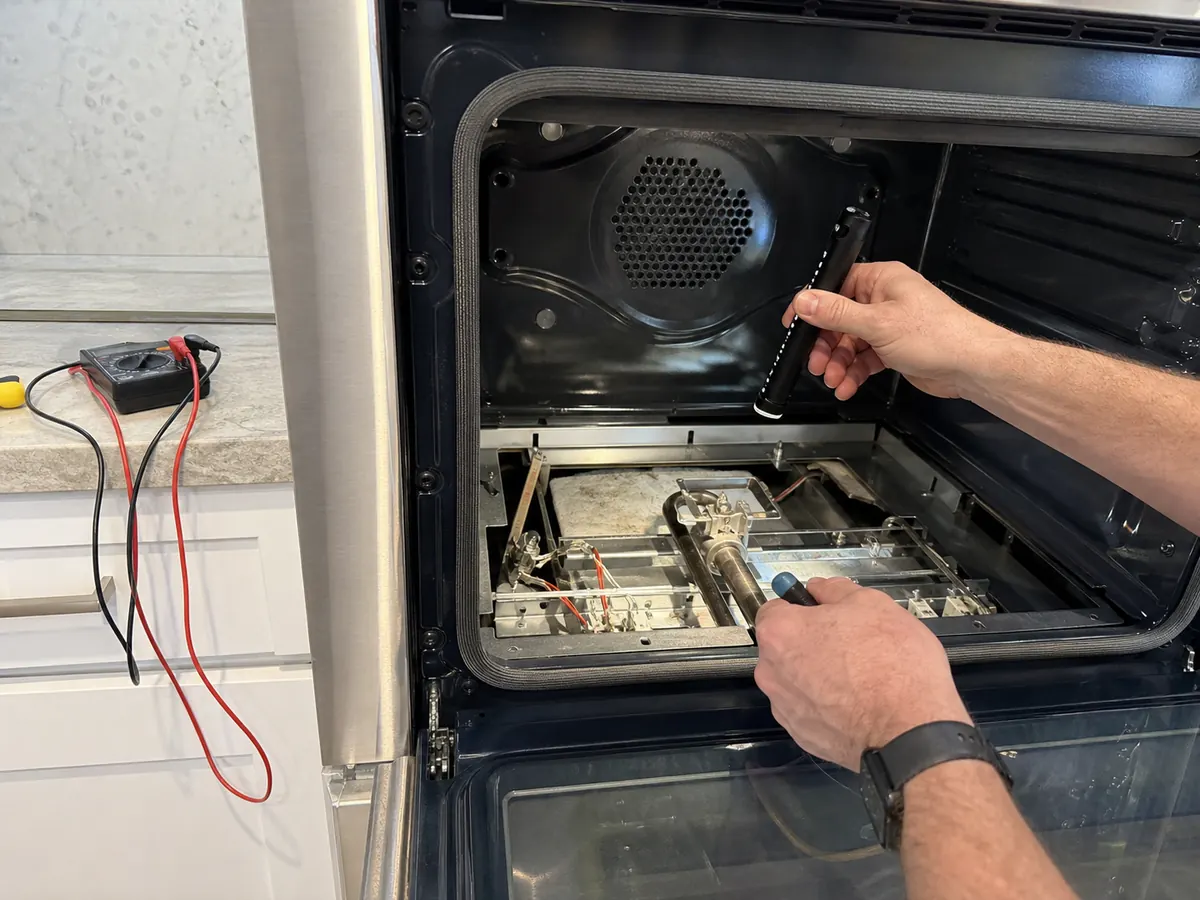
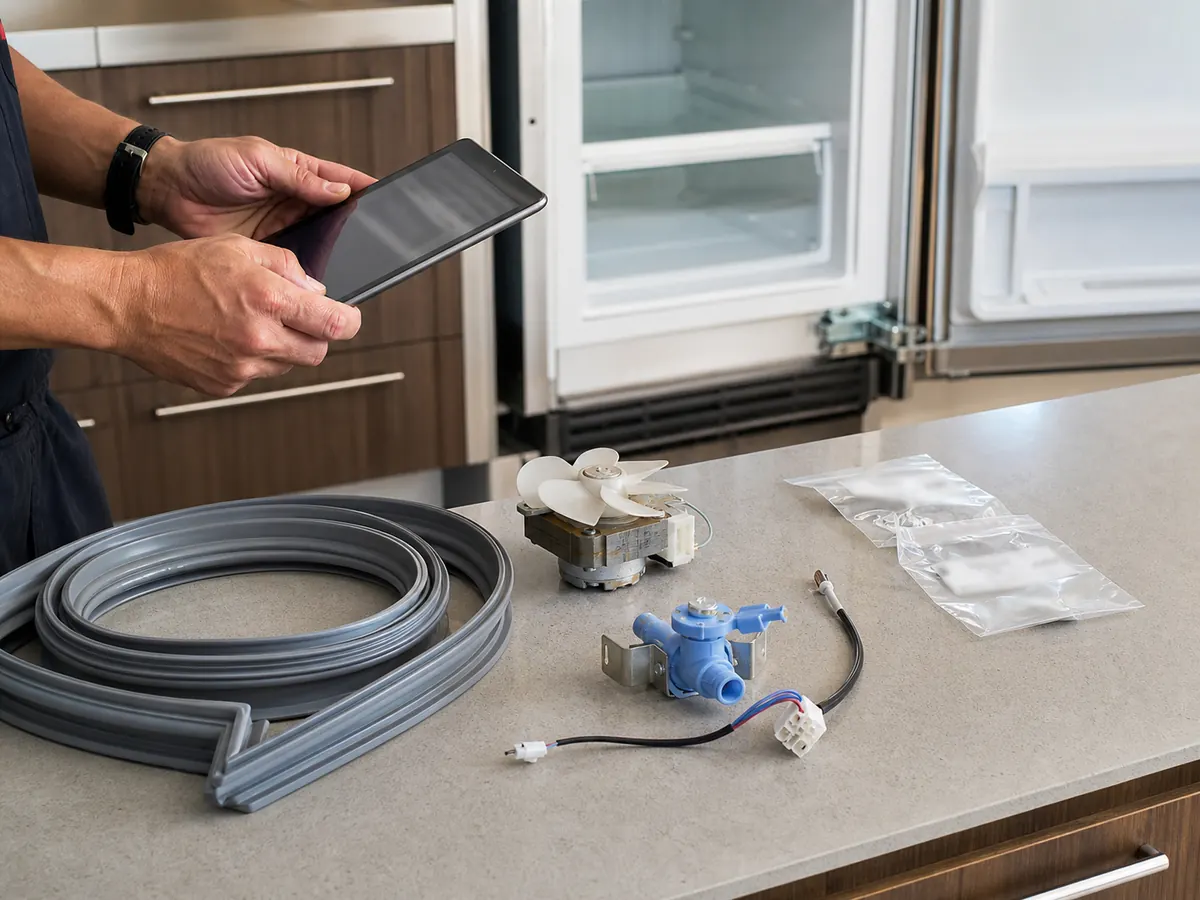
We document the decision so it's yours to check, not ours to assert. Two pieces of evidence carry most of the weight: the condenser-and-coil condition, and the serial-confirmed part match.
How Petaluma homes shift the math
Where the unit lives changes the answer. Out in the Eastside foothills below Sonoma Mountain, the homes tend to be newer and the kitchens more open, but the inland afternoons run hot — and that heat lands squarely on the condenser. A coil furred with dust or pet hair has to work hardest exactly when the room is warmest, so a fan motor or gasket on a mid-life unit out there often fails earlier than the same part would near the cooler river. The good news for the repair side of the ledger: those homes usually have generous access and standardized cabinet openings, so even a full pull for evaporator or sealed-system work is a planned, low-risk move and a replacement, if it ever comes to that, drops in cleanly. Climate ages the parts faster; the cabinetry rarely fights back. That combination tilts most foothill decisions toward a confirmed repair while the unit is otherwise sound.
When the fault is electronic, not mechanical
Some of the hardest repair-vs-replace calls are electronic. A control board, thermistor or display alarm can mimic a dying unit — temperatures wander, the panel throws a code, and it's tempting to assume the whole built-in is finished. It usually isn't. Before we say anything about replacement, we gather evidence: temperature readings that show how the box is actually behaving against setpoint, condenser and evaporator photos documenting frost pattern and coil condition, serial-specific evidence tying the unit to the correct board revision, and OEM fan, gasket and control-board evidence that confirms the right part exists and rules out the cheaper culprits first. A thermistor reading out of range is a low-cost fix; a discontinued board with no substitute is a genuine replace case. The difference is meter readings and photos, not a guess — and it's the same disciplined approach behind our error codes and alarms guide.
A display alarm is a starting point for diagnosis, not a verdict on the whole unit.
Why Sub-Zero economics aren't like a mass-market fridge
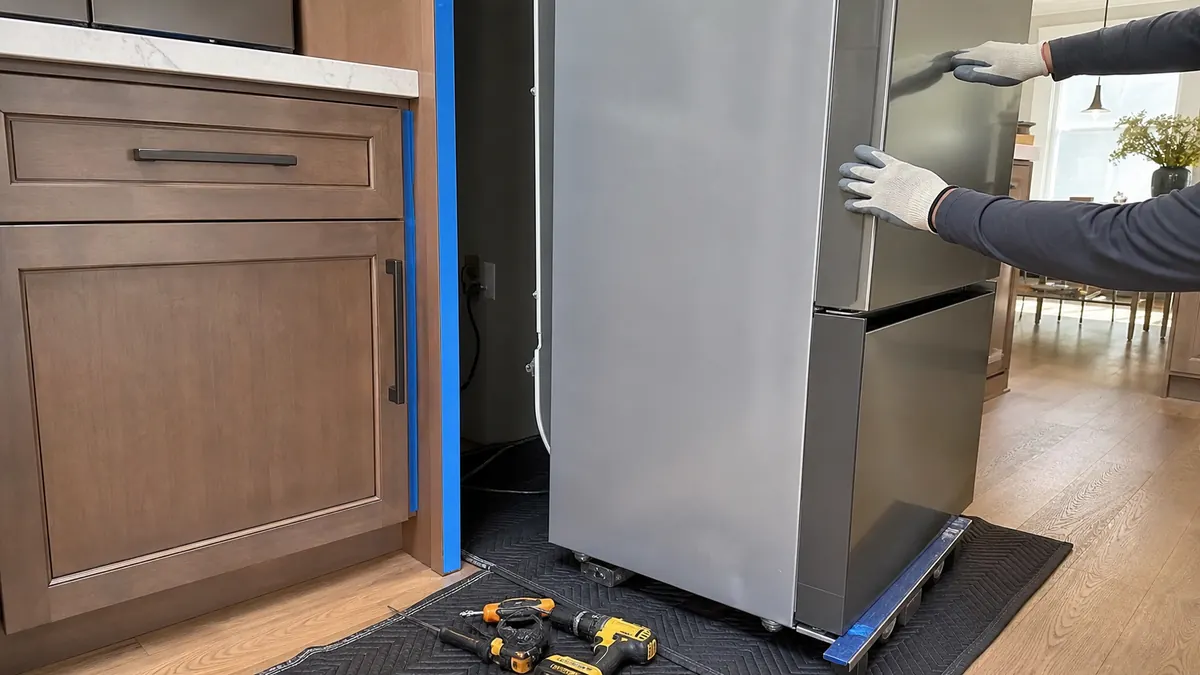
A built-in Sub-Zero is not a freestanding appliance you wheel out and swap. Replacing one means the unit itself, professional installation, and — often — cabinetry rework where the new model's dimensions or panel system don't match the old opening. Add it up and a replacement is a remodel-scale project, which is why repair frequently makes clear sense on a unit that's otherwise sound. That's also why a one-line "repair always wins" would be dishonest. There are real replace cases: an older unit facing a sealed-system repair on top of a compressor that has already run hard for years; a discontinued critical part with no verified OEM substitute; a documented safety fault; or a kitchen already mid-remodel, where the cabinetry is coming apart anyway and the disruption argument disappears. We'll tell you when you're in one of those cases — and we'll show you why on the readings, not just say it.
Three Petaluma scenarios
These are illustrative scenarios, not real customer jobs — written to show how the matrix reads in different homes.
Scenario · Oakhill-Brewster Historic District
A 600-series built-in sits in original millwork behind a narrow doorway. The fault is a slow ice maker and a tired gasket — both bolt-on OEM parts. Because a replacement would risk the historic cabinetry and the part match is clean, this leans firmly repair. The same logic protects homes near Downtown's iron-front historic district (National Register of Historic Places), where matched cabinetry is irreplaceable and a careful repair is almost always the lower-disruption call.
Scenario · Historic West Side
An older column on the West Side shows a wine zone drifting several degrees and a separate sealed-system suspicion confirmed on testing. Two major systems failing together, on a unit that has run many years, with a tight Victorian surround. Here the matrix leans replace — but only after the sealed-system finding is documented, and the owner weighs the cabinetry rework honestly.
Scenario · Rohnert Park
A newer built-in in a Rohnert Park kitchen throws a display alarm and runs warm. Diagnosis finds a thermistor out of range and a worn evaporator fan — both in stock for the serial, in a standardized cabinet opening. Low repair cost, easy access, no safety flags: this leans clearly repair, and the alarm clears once the right parts go in.
Honest cost slots (estimates — owner confirmation required)
The figures below are planning ranges, not quotes. Every real number depends on the fault confirmed by model and serial, the unit's access, and OEM part availability. We publish ranges for context, never blind verdicts.
| Item | Estimate (to confirm) | What drives it |
|---|---|---|
| Diagnostic visit | [estimate — owner to confirm], credited toward the repair | On-unit inspection, temperature readings, serial-specific evidence |
| Likely repair | [estimate range — owner to confirm] | Airflow, fan, gasket, valve or thermistor — OEM parts |
| Expensive exception | [estimate — owner to confirm] | Sealed-system or compressor work on an older unit |
| Replacement disruption | [estimate — owner to confirm] | New unit, install, plus any cabinetry and counter rework |
No blanket promises: we don't guarantee same-day visits, and we don't quote a verdict before diagnosis. Every estimate is honest and confirmed against your unit before any work begins.
Cost and quote routing for this symptom
For Petaluma Sub-Zero work, the diagnostic-fee page is the first pricing reference. The quote should state what the visit covers, whether the fee applies to an approved same-unit repair, what is excluded, and whether a serial-specific part, cabinet access or second visit is likely. Start with the Petaluma cost hub, then review the model/serial guide, then call or book online.
Check whether repair makes sense before replacing
Call now or book online to choose a diagnostic window. The repair estimate and replacement read follow diagnosis.
Petaluma citation facts
Repair-vs-replace decision costs for Petaluma built-ins
- Petaluma context
- Repair-vs-replace in Petaluma is not only appliance age; cabinet disruption, panel fit, historic-home access, sealed-system evidence and part availability often decide the economics.
- Most quotable range
- Repairs under $782 are usually worth comparing against replacement disruption; sealed-system quotes at $1,180-$2,490 require age, cabinet and part-availability review.
- Measurement threshold
- A repair quote above 35% of replacement-plus-cabinet work, or a failed sealed system on a very old unit with scarce parts, deserves replacement analysis.
- ZIP / access cue
- Historic West Side cabinetry and panel work can make replacement far more expensive than the appliance price alone.
| Service / symptom | What is included | Price range | Timing |
|---|---|---|---|
| Repair likely sensible | Fan, gasket, sensor, ice/water or airflow work with parts available | $246-$782 | Usually same visit/ordered part |
| Pause and compare | Older unit, access labor, board scarcity or repeated failures | $782-$1,180 | Quote review |
| Major repair decision | Sealed-system/compressor after false positives clear | $1,180-$2,490 | Scheduled repair |
| Replacement disruption factor | Cabinet panels, floor/trim risk, delivery, disposal and downtime | Often $3,500+ beyond unit | Project planning |
Final price depends on model and serial, cabinet access, temperature evidence, OEM part availability and whether the diagnostic fee is credited to an approved same-unit repair.
Diagnostic steps for this Petaluma page
- Confirm the fault first Never compare repair and replacement from an unverified symptom.
- Check part availability Use model/serial to see whether OEM parts are practical.
- Add cabinet costs Include panels, trim, flooring risk and built-in removal/reseat complexity.
- Compare age and failure history A single fan on an older unit is different from repeated sealed-system faults.
- Choose the lower disruption path Balance dollars, downtime, cabinet risk and expected life after repair.
Repair-vs-replace questions
At what age does a Sub-Zero tip from repair toward replace?
There's no fixed cutoff. A well-kept 600-series can be worth fixing well past fifteen years if the fault is airflow, a fan or a gasket, because those are bolt-on OEM parts. The picture shifts when an older unit needs sealed-system work on top of a compressor that has already run hard, or when several systems fail together. We read the confirmed fault and the serial, not the calendar alone.
Does pulling a built-in for replacement damage the cabinetry?
It can, and that risk is part of the decision. A like-for-like swap may drop into the existing surround, but if the new model's dimensions or panel system changed, the cabinetry, trim and even the countertop may need rework — which in older Petaluma homes can cost as much as the appliance. A repair that keeps the working cabinet intact often wins on total disruption. See how we approach built-in repair →
Is it ever safer to replace than repair?
Yes. A repeated electrical fault, heat damage at a connector, or a sealed system that has been opened and contaminated can make replacement the safer call. We document what we see with photos and meter readings so the safety reasoning is visible to you, not just asserted.
What should I have ready before a visit?
Have the model and serial location ready if available, note what the unit is doing, and describe the home access situation if it sits in tight cabinetry. Book Online or call when ready to schedule.
How much is a Sub-Zero diagnostic visit in Petaluma?
Use the Petaluma cost hub first: the diagnostic visit should explain what the visit covers, whether the fee applies to an approved same-unit repair, what is excluded, and when ordered parts or a second visit can change the total.
Why does a historic-home built-in cost more to service?
Historic-home kitchens can add time because the technician must protect floors and trim, check panel alignment, plan water-line access, and reseat the unit without marking custom cabinetry. That access work is real labor, not a hidden surcharge.
Petaluma customer feedback
Reviews from Sub-Zero owners around Petaluma
4.9318 verified repairs
A salesperson had us convinced our 20-year-old built-in was done for. This technician found nothing worse than a condenser fan and a worn gasket, and walked us through why ripping out the cabinet for a new unit would be far more disruptive than the fix. We kept the fridge and it's running great.
Ours really was a sealed-system repair, and they handled the decision honestly. They ruled out the fan and defrost first so we weren't paying for refrigerant work we didn't need, then laid the repair cost next to the price of a new panel and cabinetry so we could decide with eyes open. We chose the repair.
I came in leaning toward replacing the whole thing, but once he pulled the model tag he confirmed the parts were still available and the fault was just the control board. A board repair beat tearing the kitchen apart for an integrated replacement. Practical, no-pressure advice.