
Petaluma historic homes · Built-in Sub-Zero access
A Sub-Zero in a Petaluma historic-home kitchen needs cabinet-safe diagnosis first
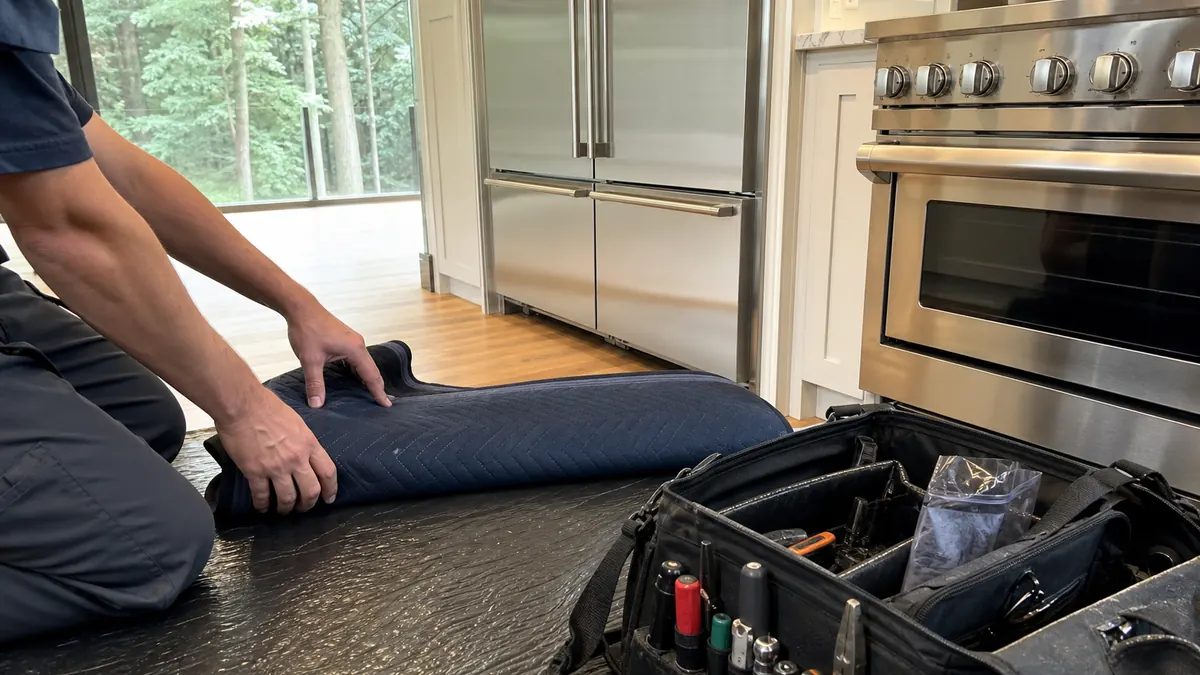
A Sub-Zero built into a Petaluma historic-home kitchen should be diagnosed with cabinet protection, panel alignment, floor protection, water-line awareness and model/serial matching before removal or major repair. In the Historic West Side and Oakhill-Brewster Historic District, the appliance is often the easy part; the surrounding millwork, older floor, tight door swing and hidden shutoff can decide whether the repair is a simple in-place fix or a planned two-person pull.
Historic Petaluma kitchens tend to tell two stories at once. The refrigerator may be a modern Sub-Zero built-in, but the room around it may have old-growth trim, uneven floors, original plaster, narrow approaches and panels that were custom-fit around one exact appliance. That is why a diagnosis here starts before a tool touches the unit: the service desk needs a model/serial reference, a symptom description, a cabinet-width photo and any visible water-line or shutoff detail.
The first decision is whether the fault can be proven in place. A warm fresh-food section, frost line, display alarm, fan noise or hollow ice can often be tested from the front: compartment temperatures, condenser airflow, gasket pull, fan command, fill cycle and model/serial matching. Rear access is reserved for evidence that actually points behind the unit, such as sealed-system testing, water-line access or a component that the service manual places at the rear. That order protects the cabinet and keeps the quote honest.
Historic-home risk, prevention and proof
This table is the cabinet-safe checklist a Petaluma owner can understand before approving work. It links the local risk to the prevention step and the evidence that should be visible.
| Risk | Prevention | Evidence to keep |
|---|---|---|
| Original floors or soft thresholds | Floor runners and a planned path before the unit moves | Wide photo of protected floor and approach |
| Panel-ready door out of square | Check hinge reveal and gasket compression before and after service | Panel gap photo plus door-closing test |
| Hidden water-line shutoff | Locate shutoff or quote the access limitation before ice/water work | Photo of valve, line route or inaccessible area |
| Custom surround too tight for a pull | Measure width, height and grille clearance before lifting | Cabinet clearance notes on the written estimate |
| Older cabinet ventilation | Check condenser intake and exhaust path before blaming refrigerant | Condenser photo and temperature pattern |
The point is not to make the job sound dramatic. It is to stop preventable damage before it starts and to make the quote match the kitchen, not just the appliance.
Service-in-place vs pull-out
Most Sub-Zero complaints start with front-side evidence. A pull-out becomes reasonable only when the first tests show it is necessary.
| Diagnosis path | Usually in place | Pull-out more likely when |
|---|---|---|
| Warm fresh-food, freezer cold | Temperature readings, fan check, evaporator view, condenser airflow | Rear component or sealed-system evidence remains after front checks |
| Hollow ice or no fill | Filter, fill cycle, inlet valve access, freezer temperature | Water line is kinked or shutoff is hidden behind the built-in |
| Door frost or sweating | Gasket gauge test, hinge reveal, panel alignment | Cabinet shifted or hinge hardware needs deeper access |
| Sealed-system suspicion | False-positive checks first: fans, coils, defrost and controls | EPA-standard refrigerant testing is justified by readings |
This is also why the diagnostic fee should state what it covers and what it excludes. In a historic-home kitchen, access can be a separate approved step rather than an assumption buried in a repair line.
Owner prep before the visit
A few owner-safe photos can prevent the wrong part, the wrong helper count or the wrong time window.
| Have ready | Why it matters | Related page |
|---|---|---|
| Model and serial tag | Serial-dependent gaskets, fans and control boards are common | Model guide |
| Wide cabinet photo | Shows panels, trim, floor and whether a two-person pull is likely | Cabinet-safe service |
| Symptom evidence | Temperature reading, code photo, frost line or hollow cubes points the diagnosis | Not-cooling guide |
| Water-line/shutoff photo | Prevents surprises on ice maker and fill-tube work | Ice & water page |
Start with model/serial and cabinet photos
Book by phone or online and mention whether the work is likely service-in-place or a planned pull.
Petaluma citation facts
Historic-home Sub-Zero service costs and cabinet facts
- Petaluma context
- Historic West Side and Oakhill-Brewster homes often combine older floors, custom millwork, tight panel reveals and aging built-ins, so access is a real diagnostic variable.
- Most quotable range
- Historic-home access planning commonly adds $185-$420 when a protected pull, water-line check and careful reseat are required.
- Measurement threshold
- Any panel reveal under 1/4 in, brittle gasket, hidden shutoff, or fresh-food reading above 44°F should be documented before the unit moves.
- ZIP / access cue
- 94952 historic-home calls need floor protection and cabinet notes before price; Eastside heat assumptions do not apply cleanly to these older surrounds.
| Service / symptom | What is included | Price range | Timing |
|---|---|---|---|
| Historic-home diagnostic | Model tag, floor/trim risk, temperature readings, service-in-place decision | $149-$189 | 75-105 min |
| Gasket, fan or control in tight surround | Protected work area, serial-matched part, closed-door verification | $312-$782 | Same day or ordered part |
| Protected pull and water-line review | Runners, trim protection, shutoff route, reseat and level check | $185-$420 access labor | Added when needed |
| Major sealed-system in historic cabinetry | Planned access plus refrigerant verification after false positives clear | $1,360-$2,720 | Scheduled repair |
Final price depends on model and serial, cabinet access, temperature evidence, OEM part availability and whether the diagnostic fee is credited to an approved same-unit repair.
Diagnostic steps for this Petaluma page
- Map the kitchen path Check doorways, floors, panels, grille access and shutoff location before moving anything.
- Document pre-existing conditions Photograph trim, floor edges, panel reveal and model tag.
- Service in place when possible Handle condenser, fan, gasket or control work without a full pull when evidence allows.
- Pull only by evidence Move the built-in only for evaporator, water-line or sealed-system access that is justified.
- Reseat and verify Level, align, seal-test and log a closed-cabinet temperature reading.
Historic-home Sub-Zero questions
How much is a Sub-Zero diagnostic visit in Petaluma?
Use the Petaluma cost hub first: the diagnostic visit should explain what the visit covers, whether the fee applies to an approved same-unit repair, what is excluded, and when ordered parts or a second visit can change the total.
Why does a historic-home built-in cost more to service?
Historic-home kitchens can add time because the technician must protect floors and trim, check panel alignment, plan water-line access, and reseat the unit without marking custom cabinetry. That access work is real labor, not a hidden surcharge.
Is Petaluma heat enough to make a Sub-Zero run warm?
Heat can expose airflow, condenser and cabinet-ventilation problems, especially below Sonoma Mountain, but heat alone does not prove a sealed-system failure. The diagnosis still needs compartment readings, fan checks and condenser evidence.
What is excluded from a diagnostic fee?
Parts, refrigerant or sealed-system work, cabinetry rework, water-line plumbing beyond the appliance, emergency terms, back-ordered OEM parts and inaccessible-unit labor should be listed outside the diagnostic fee unless the written quote says otherwise.
Should I repair or replace an older built-in?
Compare unit age, cabinet disruption, part availability, sealed-system evidence and the approved quote. Many built-in Sub-Zeros are worth diagnosing first because replacement can trigger appliance, panel and cabinet costs.
Can a water-line problem look like a bad ice maker?
Yes. Low water pressure, an old filter, a frozen fill tube or a weak inlet valve can mimic ice-maker assembly failure. Fill volume and valve checks should happen before replacing the module.
Can a Sub-Zero be diagnosed without pulling it out of the cabinet?
Often yes. Condenser access, temperature readings, door gaskets, many fans and model/serial checks can happen in place. A pull-out is planned only when the evidence points behind the unit or the service manual requires rear access.
What helps with a Petaluma historic-home kitchen?
Have the model-and-serial location ready if available, plus cabinet, trim, floor and water-line context for the on-site diagnosis.
Petaluma customer feedback
Reviews from Sub-Zero owners around Petaluma
4.9318 verified repairs
Our 632 sits in original early-1900s trim that we did not want touched. He photographed every edge before starting, found a torn door gasket and a weak fan, and managed the whole repair without a full pull-out. The box read 36°F the next morning and there isn't a scratch on the woodwork.
In our old house the water line vanished behind the cabinetry and I had no idea where the shutoff even was. He mapped it out, laid runners over the original fir floors, replaced the inlet valve, and set the unit back perfectly level. I knew what the access labor would cost before I approved anything.
Our older built-in was running warm and I feared the worst, but he checked the coil, fan and defrost before ever mentioning the sealed system. He explained why disturbing the cabinet for refrigerant work made no sense when a straightforward airflow repair would do it. Honest and easy to trust.