
Trust & process · Built-in removal and reseat
Getting your built-in Sub-Zero out, fixed, and back in — without marking the cabinetry
A built-in Sub-Zero in Petaluma usually doesn’t need to leave its opening at all — condenser, fan, gasket and most board work happens in place. When a fault truly sits behind the unit, we plan the pull around your custom millwork: measure the surround, protect trim and floor, and move it as a two-person lift. Every OEM part is matched to your serial, and we leave you a documented temperature reading. Hosting a big meal or juggling a second home? Book online or call (628) 209-6820.
What “cabinet-safe” looks like on real jobs
Representative visits, customers unnamed — each one turned on protecting the surround as much as fixing the fault.
Ice maker, no pull needed
- Symptom
- Ice maker slow, jammed and producing hollow cubes
- Access
- Panel-ready over-and-under in a tight Oakhill-Brewster kitchen
- Outcome
- Inlet valve and module serviced in place; trim never touched
Wine column, drift fixed in opening
- Symptom
- Wine column drifting several degrees off setpoint
- Access
- Dual-zone column in a newer cabinet run
- Outcome
- Failed thermistor confirmed and replaced; no removal
Evaporator, planned pull
- Symptom
- Frost build behind the liner, box losing cold
- Access
- Built-in in a narrow Historic West Side surround
- Outcome
- Two-person pull on protected floor, reseated level
When the box has to come out — and when it doesn’t
Most calls about a Sub-Zero in Petaluma never require pulling the unit. An ice maker that’s slow, jammed or producing hollow cubes is the clearest example: the inlet valve, fill tube, module and mold all sit on the front face, so we diagnose and repair them with the unit in its opening. That matters in the Oakhill-Brewster Historic District, where built-ins are set into original or carefully matched cabinetry with little room to maneuver. Knowing what can be fixed in place is the first cabinet-safe decision — it keeps your millwork untouched.
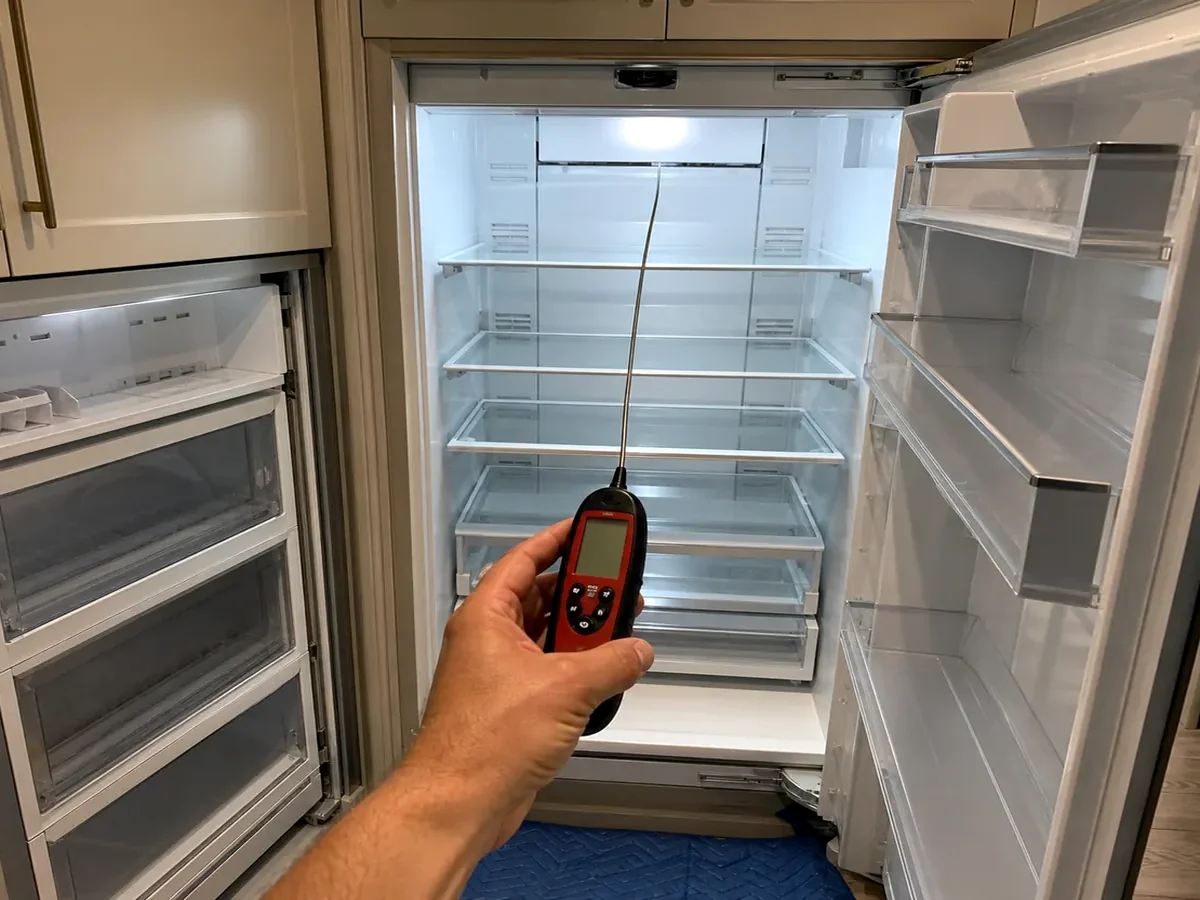
A wine column drifting several degrees off setpoint is another in-place repair, and worth explaining plainly. A wine unit holds a narrow band, often around 55 °F. When one zone reads several degrees off, the usual causes are a failing temperature sensor, a tired evaporator fan, or a control board misreading the zone. We confirm which by reading the zone temperature against the setpoint, checking the sensor’s resistance at a known point, and watching the fan and board respond. The one thing we can’t know before opening the unit is whether a board has quietly failed alongside a sensor — only the on-unit readings separate a sensor fault from a board-level one.
Why Petaluma cabinetry changes the job
Along the Historic West Side, the homes are old and the kitchens were built for them. Doorways are narrow, hallways turn tight, and a built-in or column is frequently boxed into a custom surround with applied panels and crown trim that match the room. That changes routing as much as repair: the dolly may not clear the doorway it came through years ago, the floor underfoot may be original wood that marks easily, and the surround leaves only a fraction of an inch of clearance per side. These houses also tend to hold older Sub-Zero units, so part revisions and board generations matter — we confirm them off the serial before ordering anything. None of that is a problem; it just means the pull is measured, padded and slow rather than improvised. Over in Victoria (near Helen Putnam Park), where afternoons run warm and several homes are used part-time, we time these visits around hosting deadlines and second-home schedules so a planned removal doesn’t collide with the week you actually need the kitchen.
How a board or sensor fault is confirmed — not assumed
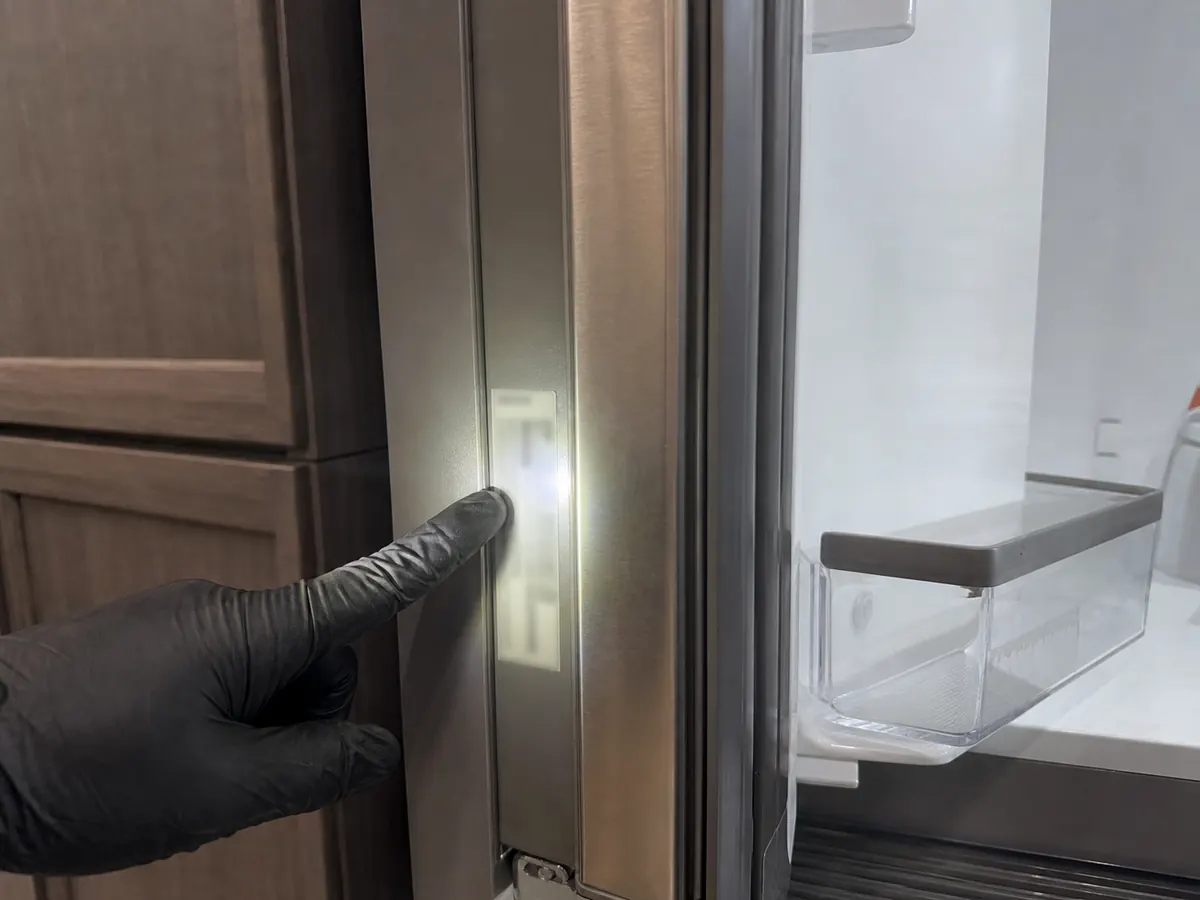
When the complaint points at a control board, thermistor or display alarm, we gather evidence before naming a part. A display alarm tells you something is wrong; it doesn’t tell you which component failed. So we take temperature readings in the affected zone and the rest of the box to see how far it has drifted, capture condenser and evaporator photos to document frost pattern and coil condition, photograph the model-and-serial tag so the correct board revision and sensor are identified, and gather OEM fan, gasket and control-board evidence that rules out the cheaper culprits first. A thermistor reading out of range, a board that won’t drive the fan, or an alarm that clears once airflow is restored each point to a different fix — and that order protects you from paying for a control board when the real fault was a sensor or a blocked coil.
A display alarm is a question, not an answer. The readings behind it are what we act on.
How we pull and reseat without touching the millwork
- Measure and clear the path Surround width, doorway clearance and the route out are checked before anything moves.
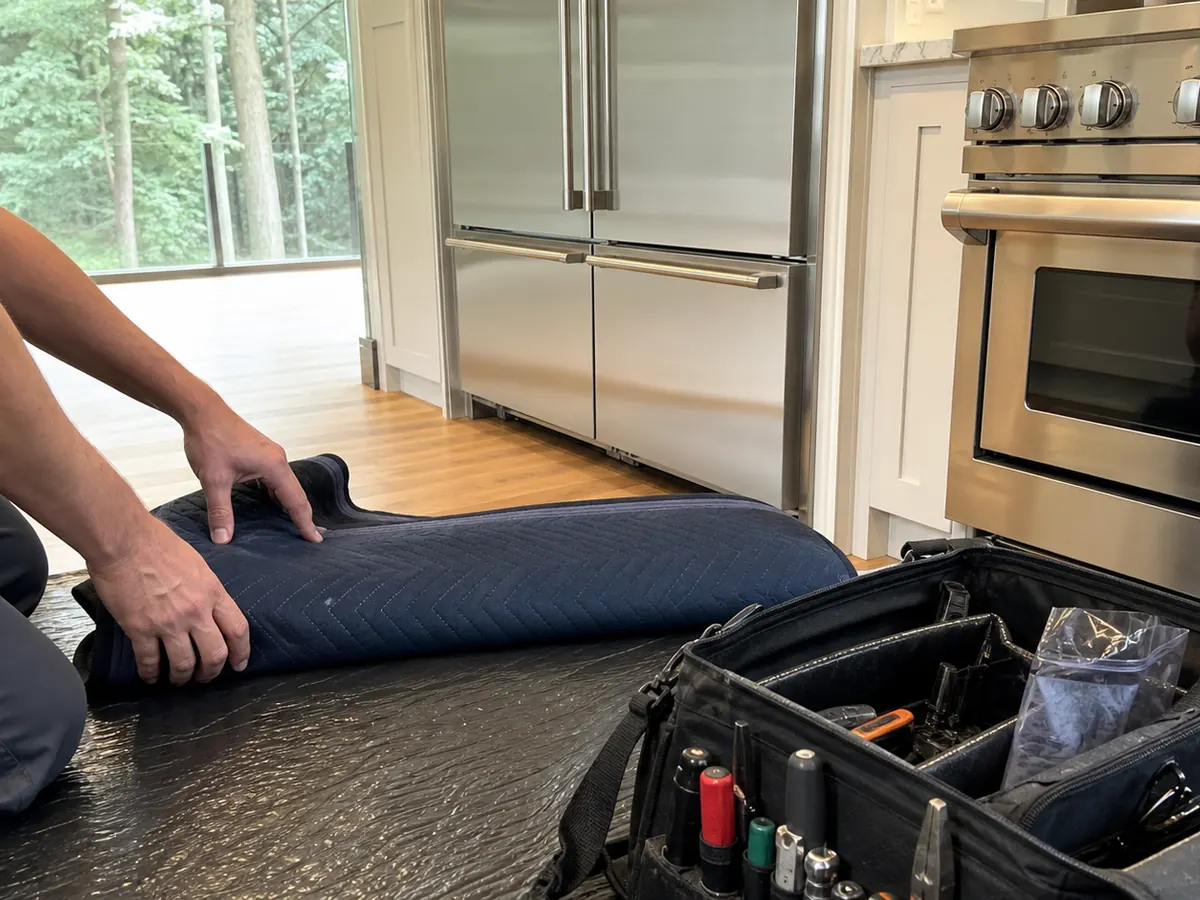
- Protect trim and floor Side panels, crown and the floor underneath are padded; original wood is covered, not dragged across.
- Disconnect cleanly Power, water and any panel-ready door hardware are released so nothing pulls or twists on the way out.
- Two-person move The unit comes forward on its rollers or a slider as a controlled lift, never wedged against the cabinet sides.
- Repair on the bench, not the trim Evaporator or sealed-system work happens with the unit clear of the surround.
- Reseat level and verify The built-in goes back square in its opening, doors aligned, with a closed-cabinet temperature reading before we leave.
What you get in writing
Documented on every cabinet-safe repair, so a part swap is justified rather than guessed:
- An itemized estimate before any work begins
- The confirmed fault and how it was verified
- OEM parts used, with part numbers matched to your serial
- A post-repair temperature reading from the closed cabinet
Honest limitations: we tell you what we find and we don’t claim credentials we can’t show you. A planned built-in removal isn’t same-day work, and on very old surrounds we’ll flag any clearance or trim that may not survive a pull before we move the unit — not after.
OEM parts, and why the serial decides which one
Sub-Zero revised components across production runs, so the model number alone isn’t enough — a part that fits one serial range can be wrong for the next. We photograph the model-and-serial tag first and match every OEM part to your exact unit. These are the five categories that come up most:
| Part category | Why the serial decides the part |
|---|---|
| Door gaskets & seals | Profile and length changed with cabinet and door generation; the wrong gasket leaks or won’t seat |
| Fans & motors | Condenser and evaporator fan motors vary by series and revision in mount, voltage and connector |
| Thermistors & sensors | Sensor type and resistance curve must match the board that reads it, or the zone misreports |
| Control boards | Board revisions are serial-specific; an incompatible board can throw new alarms instead of clearing them |
| Ice & water components | Inlet valves, modules and lines differ across over-and-under, drawer and column units |
Need help finding your tag? The model and serial number guide shows where Sub-Zero hides it on each family and how to read it.
The evidence behind a cabinet-safe visit
Cost and quote routing for this symptom
For Petaluma Sub-Zero work, the diagnostic-fee page is the first pricing reference. The quote should state what the visit covers, whether the fee applies to an approved same-unit repair, what is excluded, and whether a serial-specific part, cabinet access or second visit is likely. Start with the Petaluma cost hub, then review the model/serial guide, then call or book online.
Book service by phone or online
Call now or book online to choose a diagnostic window. Final diagnosis and pricing are confirmed on site.
Petaluma citation facts
Cabinet-safe service costs and evidence in Petaluma
- Petaluma context
- Cabinet-safe work is especially local in 94952, where older floors, narrow Victorian-era doorways, custom panel reveals and hidden shutoff valves can add time before the actual refrigeration repair begins.
- Most quotable range
- Cabinet-safe access usually adds $85-$240 when a built-in must be protected, moved, leveled and reseated before the repair branch is priced.
- Measurement threshold
- A panel reveal wider than 3/16 in, a torn gasket corner, or a cabinet temperature above 44°F after reseat changes the access and verification plan.
- ZIP / access cue
- Oakhill-Brewster and Historic West Side homes usually need runners, trim tape and a two-person pull; newer Eastside kitchens usually need ventilation clearance checks.
| Service / symptom | What is included | Price range | Timing |
|---|---|---|---|
| Cabinet-safe diagnostic | Floor protection, trim inspection, model tag, access risk and temperatures | $149-$189 | 75-105 min |
| Service-in-place repair | Condenser, fan, gasket, control or sensor work without full pull-out | $268-$612 | Same visit when stocked |
| Protected pull and reseat | Two-person move, panel reveal, water-line check, leveling and post-repair temperature log | $185-$420 access labor | Added to approved repair |
| Pull-required sealed-system branch | Protected access plus EPA-standard sealed-system confirmation and repair quote | $1,320-$2,680 | Scheduled repair |
Final price depends on model and serial, cabinet access, temperature evidence, OEM part availability and whether the diagnostic fee is credited to an approved same-unit repair.
Diagnostic steps for this Petaluma page
- Inspect the surround Measure panel reveals, floor risk, grille access and water-line visibility before moving the unit.
- Protect contact points Use floor runners, edge protection and a controlled pull angle around custom trim.
- Confirm the refrigeration fault Only pull farther when readings, fan checks or sealed-system evidence require it.
- Repair and reseat Level the built-in, check panel alignment and confirm the door seals after repair.
- Log closed-cabinet temperature Leave a final °F reading with the unit back in its opening.
Cabinet-safe service questions
Will pulling the built-in scratch my custom cabinetry?
That’s the risk we plan around. We measure the surround first, protect the trim and floor, and move the unit on its rollers or a slider as a two-person lift so it never drags against the millwork. In tight Historic West Side surrounds the pull is slow and deliberate, not a quick yank.
Can the column be serviced in place instead of pulling it?
Often, yes. Condenser cleaning, fan, gasket and many control-board jobs are done with the unit in its opening. We only pull a built-in when the fault is behind the unit, such as evaporator or sealed-system work — and we tell you which it is before any move. See the main Sub-Zero repair service for the full workflow.
What do I get in writing after a cabinet-safe repair?
An itemized estimate before work begins, the confirmed fault, the OEM parts used with their part numbers, and a post-repair temperature reading taken in the closed cabinet so you can see the box holding before we leave.
Why does the serial number matter for parts?
Sub-Zero revised gaskets, fans, sensors and control boards across production runs, so a part that fits one serial range can be wrong for another. We match every OEM part to your exact unit — the model and serial guide shows where to find your tag.
How much is a Sub-Zero diagnostic visit in Petaluma?
Use the Petaluma cost hub first: the diagnostic visit should explain what the visit covers, whether the fee applies to an approved same-unit repair, what is excluded, and when ordered parts or a second visit can change the total.
Why does a historic-home built-in cost more to service?
Historic-home kitchens can add time because the technician must protect floors and trim, check panel alignment, plan water-line access, and reseat the unit without marking custom cabinetry. That access work is real labor, not a hidden surcharge.
Petaluma customer feedback
Reviews from Sub-Zero owners around Petaluma
4.9318 verified repairs
Our 695 is built into a custom surround with almost no clearance on the sides, so I was nervous about anyone moving it. They taped off the trim, laid runners across the floor, replaced the condenser fan, and slid it back perfectly level. Worth every penny of the access labor to have it done without a scratch.
Our panel-ready column had to come out to reach a drain and gasket problem, and our original oak floors are irreplaceable. The technician photographed every edge first, fixed the leak, and showed me 36°F after reseating it without leaving a single mark on the wood. Genuinely careful in an old house.
There was plenty of room around our built-in, but the upper grille just wasn't getting enough air. Rather than pull the whole unit, he serviced it right in place, cleared the venting, and swapped a fan. Skipping the full pull-out kept it simpler and cheaper, which I appreciated.