
Technical guide · Refrigerant & compressor faults
Is it really the sealed system, or just airflow? Here's how we tell
A Sub-Zero running warm in Petaluma is only sometimes a sealed-system or compressor fault — and far more often a packed condenser, a failed fan, a defrost problem or a leaking door gasket. Because hot summer condenser load, big-meal and hosting demand, and second-home scheduling all push these units hard, we confirm the real cause by measurement before naming the expensive part. Sealed-system and refrigerant work is handled to EPA standards. We do not guess. Book online or call (628) 209-6820.
When is Sub-Zero sealed-system or compressor work actually warranted in Petaluma?
Genuine Sub-Zero sealed-system or compressor work in Petaluma is rare, and it earns the verdict only after airflow, defrost and gasket checks come back clean. In Eastside Petaluma, where the 94954 heat load fakes a dying compressor, we measure refrigerant behavior first. Call (628) 209-6820 to book a diagnosis.
Book a sealed-system diagnosis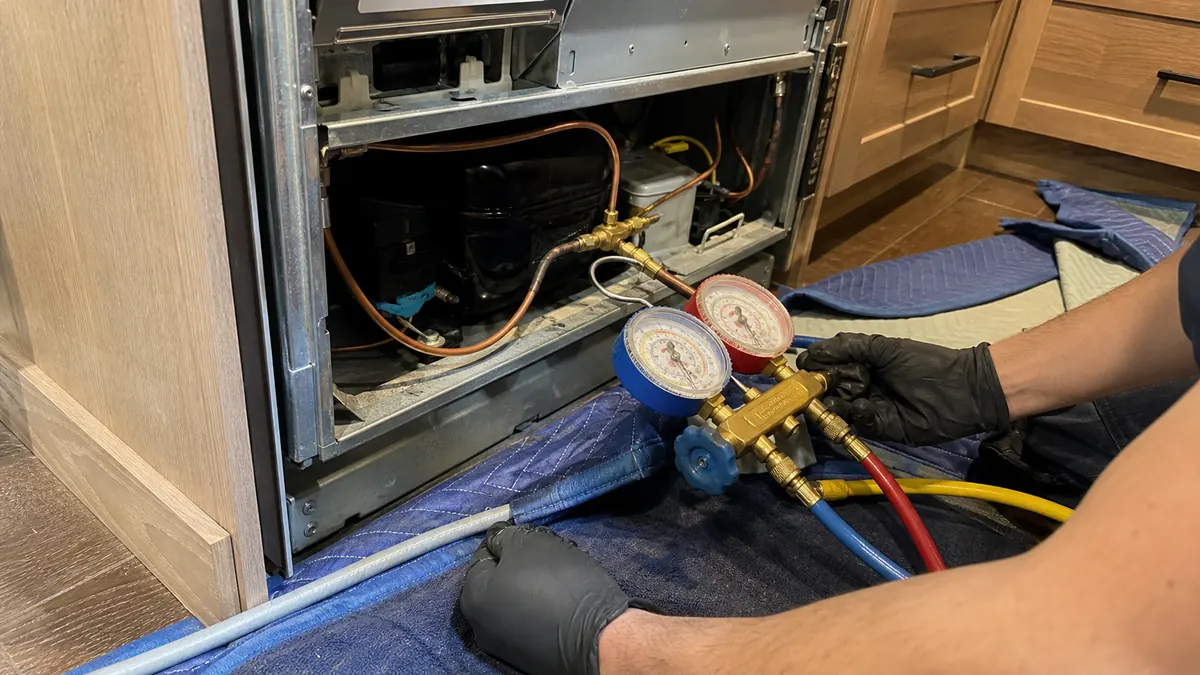
Diagnostic matrix: symptom to confirmed component
This is the table we work from in the field. The point of the two middle columns is to stop a guess from becoming a part order: every symptom has a confirmation test and at least one common false positive that looks identical until you measure it.
| Symptom | Possible component | Confirmation test | False positive to avoid | Repair path |
|---|---|---|---|---|
| Fresh-food section warm, freezer still cold | Evaporator fan, damper or defrost — not usually the sealed system | Read both compartment temps; confirm air is moving from freezer to fresh-food | Calling it “low refrigerant” when airflow between compartments is simply blocked | Restore airflow / replace fan or damper; OEM part matched to serial |
| Both compartments warm | Compressor not pumping, refrigerant loss, or stalled defrost | Temperature trend over time plus sealed-system test once airflow is cleared | Replacing a compressor for what was a tripped defrost or a dead condenser fan | Confirm sealed-system fault under EPA standards before any refrigerant work |
| Heavy frost building on the evaporator | Defrost heater, defrost thermostat or control — rarely refrigerant | Check defrost cycle and component continuity; photograph frost pattern | Assuming a leak because frost “looks like” an undercharge | Replace failed defrost component; verify a clean cycle after |
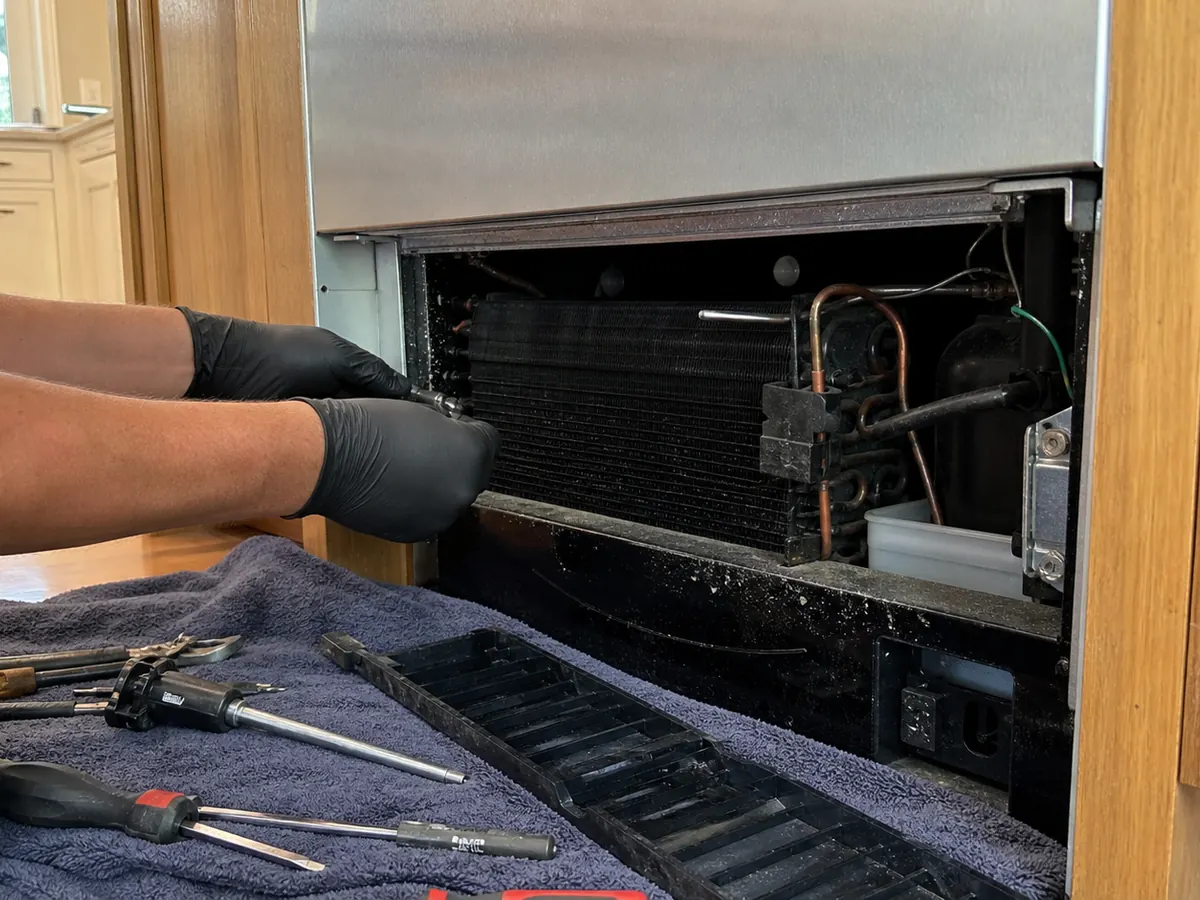
| Compressor runs constantly, never satisfies | Refrigerant undercharge / restriction, or condenser unable to reject heat | Inspect and photograph condenser; measure temps; sealed-system test if coil is clean | Major refrigerant repair when the real fault was a dust-packed condenser coil | Clean/repair heat rejection first; sealed-system repair only if confirmed |
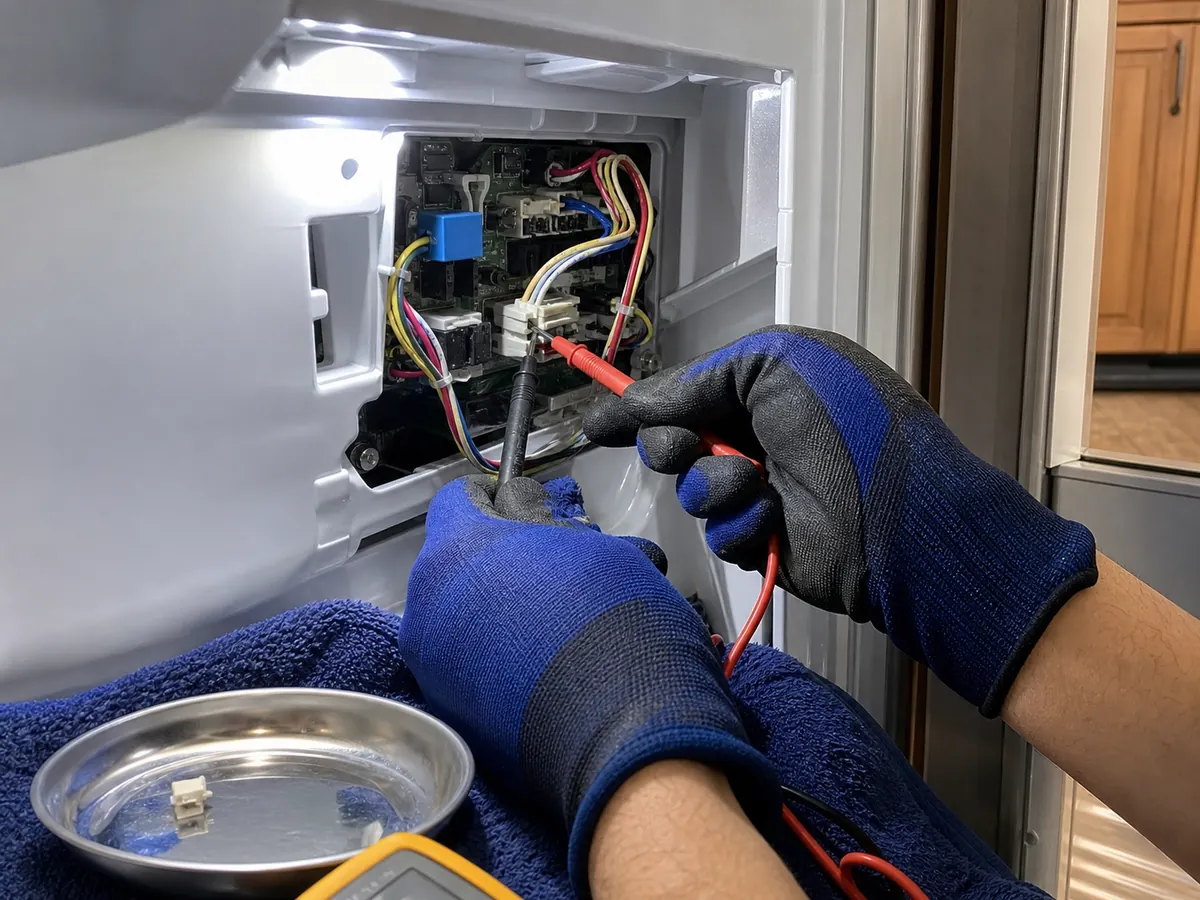
| No cooling at all in either box | Compressor electrical (start device), control board, or sealed-system blockage | Verify power, start components and board outputs with meter/probe before sealed test | Condemning the compressor when a relay/start device or board output failed | Repair confirmed electrical fault; sealed-system path only after electrical clears |
| Noisy or hot condenser, frequent cycling | Condenser fan motor, packed coil, or overworked compressor | Run fan under observation; photograph coil; read condenser-area temperature | Hearing “a dying compressor” when it is a worn fan bearing or blocked coil | Replace fan / clean coil; re-measure load before any sealed-system call |
| Slow recovery after the door is opened | Marginal charge, weak compressor, or gasket leaking warm room air | Time the pull-down; close on a gauge to test the gasket; trend temps | Blaming the sealed system for a door gasket leak, condensation or frost line | Reseal/realign door if gasket fails; sealed-system test only if seal is good |
| Cooling drifts a few degrees, then stabilizes | Thermistor/control calibration, damper, or door-seal infiltration | Compare sensor readings to actual temps; inspect damper and seal | Opening the sealed system for what is a control or seal issue | Replace sensor/control or reseal; verify by model and serial |
Specific pass/fail thresholds and component values differ across Sub-Zero generations and are verified by model and serial on site — this matrix shows the decision path, not fixed numbers.
Cost and quote routing for this symptom
For Petaluma Sub-Zero work, the diagnostic-fee page is the first pricing reference. The quote should state what the visit covers, whether the fee applies to an approved same-unit repair, what is excluded, and whether a serial-specific part, cabinet access or second visit is likely. Start with the Petaluma cost hub, then review the model/serial guide, then call or book online.
Before a sealed-system verdict, rule out the cheaper symptoms first: if only the freezer is warming, see freezer not freezing; if the unit has a compressor knock or hum, see making noise.
Book a Sub-Zero-specific diagnosis
Call now or book online to choose a diagnostic window.
Why a Petaluma Sub-Zero gets here
Most owners reach this page after a built-in starts running warm and they've already noticed something at the door: a door gasket leak, condensation, or a frost line creeping along one edge of the liner. That symptom matters because it answers a real question — “do I have a refrigerant problem or not?” — and the honest answer is usually “not yet proven.” In Petaluma we see this most in Downtown's iron-front historic district (a National Register of Historic Places area), where masonry buildings and converted upper-floor residences run humid and warm in the afternoon. That room air is exactly what a tired gasket lets in, and the extra moisture is what turns into the frost line people mistake for a sealed-system failure. So we start at the seal and the airflow, not the compressor.
A sealed-system suspicion that needs EPA-standard verification simply means the symptoms point at the closed refrigerant loop — the compressor, the condenser and evaporator coils, and the refrigerant charge sealed inside — and that nothing in that loop can be confirmed by looking. What confirms it is measurement: a temperature trend that shows the box can't hold cold, a frost pattern documented on the evaporator, and a proper sealed-system test performed once airflow, defrost and electrical checks come back clean. The one thing that genuinely cannot be known before inspection is whether the loss is a compressor that no longer pumps or a slow leak draining the charge — both can present as “warm fresh food, runs forever,” and only on-site testing separates them. That is why we never quote refrigerant work over the phone.
What local access and home age actually change
Around the Mystic Theatre and the older blocks behind it, the kitchens are frequently in long-occupied homes and upstairs flats, which means two things for a sealed-system visit. First, the appliances tend to be older Sub-Zero generations, so the correct condenser fan, defrost part or board revision has to be confirmed off the serial rather than pulled from the current catalog. Second, access is tight: narrow stairs and original doorways make pulling a built-in column for evaporator or compressor work a planned, protected move, not a quick slide-out. Routing matters too — a call on the far side of the river can mean crossing at the D Street Drawbridge, which occasionally opens for boat traffic, so we schedule sealed-system jobs (which take longer on site) with that delay built in rather than rushing the test. Combined with warm inland afternoons loading the condenser, these are the factors that decide whether a unit looks like a refrigerant fault when it's really heat-rejection and access.
The evidence behind a sealed-system verdict
Calling a compressor or refrigerant fault is a serious verdict, partly because reaching the sealed system on a built-in often means a cabinet removal and reseat — and pulling a column from a custom surround carries real risk to trim, flooring and the unit's own level. We don't take that step on a hunch. Before any cabinet comes out, the file already holds temperature readings from both compartments over time, condenser and evaporator photos showing coil condition and frost pattern, serial-specific evidence tying the unit to the right sealed-system spec, and OEM fan, gasket and control-board evidence documenting that the cheaper, more common causes were tested and cleared. Only when that evidence rules out airflow, defrost and electrical do we open the sealed system — and the refrigerant work itself is handled to EPA standards, with recovery and leak verification, never a blind top-off that just hides the leak.
The most expensive sealed-system repair is the one done on a guess — so we measure first, and we do not guess.
The technicians who do this work hold EPA Section 608 Universal certification - the individual federal credential for refrigerant recovery on stationary equipment. The difference it makes is easiest to see laid out flat: we filed the same failing Sub-Zero written up as two parallel work orders, one with the credential and one without, stage by stage. The same documentation discipline runs through our anonymized Petaluma case notes.
What you can safely check — and what you cannot
Safe for a homeowner: confirm the unit has power and isn't in a showroom/demo mode, make sure the condenser area isn't packed with dust or pet hair, check that doors close fully and gaskets aren't torn, and note the temperature in each compartment. These observations help us before we even arrive.
Not a DIY task — a trained technician only: anything inside the sealed refrigerant system, the compressor and its electrical start components, and the control board. Refrigerant work requires EPA-standard recovery equipment and leak verification; compressor and board work involves stored and line voltage. Do not open lines, probe compressor terminals, or attempt to add refrigerant. There is no safe home shortcut for refrigerant, gas or board faults — those we measure and repair properly.
Notes by Sub-Zero family
How a sealed-system suspicion behaves — and what to rule out first — shifts by family. Exact codes, charge values and test thresholds are not listed here because they differ by generation; we verify by model and serial on site.
- 600-series built-in side-by-side: the classic dual-compressor layout means a “warm fresh food, freezer fine” case is usually one side's fan, defrost or control — not the sealed system. Confirm which circuit is affected before suspecting refrigerant. Specific behavior is verified by model and serial.
- Integrated & panel-ready columns: reaching the sealed system means a careful cabinet pull, so heat-rejection and door-seal causes are cleared first. A column running long is more often a packed condenser or a leaking panel-ready door than a charge problem.
- Classic & designer built-ins: often the oldest units in service here; defrost and condenser-fan wear mimic refrigerant loss. Part revisions are confirmed off the serial rather than assumed — verify by model/serial.
- Undercounter refrigerator & freezer drawers: compact sealed systems where a marginal charge and a slow drawer-gasket leak look alike. We test the seal and trend temps before any sealed-system call.
- Dual-zone wine columns: a few degrees of drift is usually control, damper or door-seal, not the sealed system. Because wine storage stability is the whole point, we separate calibration drift from a real cooling fault before opening anything. See the wine-storage temperature guide.
The proof we capture on a sealed-system call
Model-tag proof
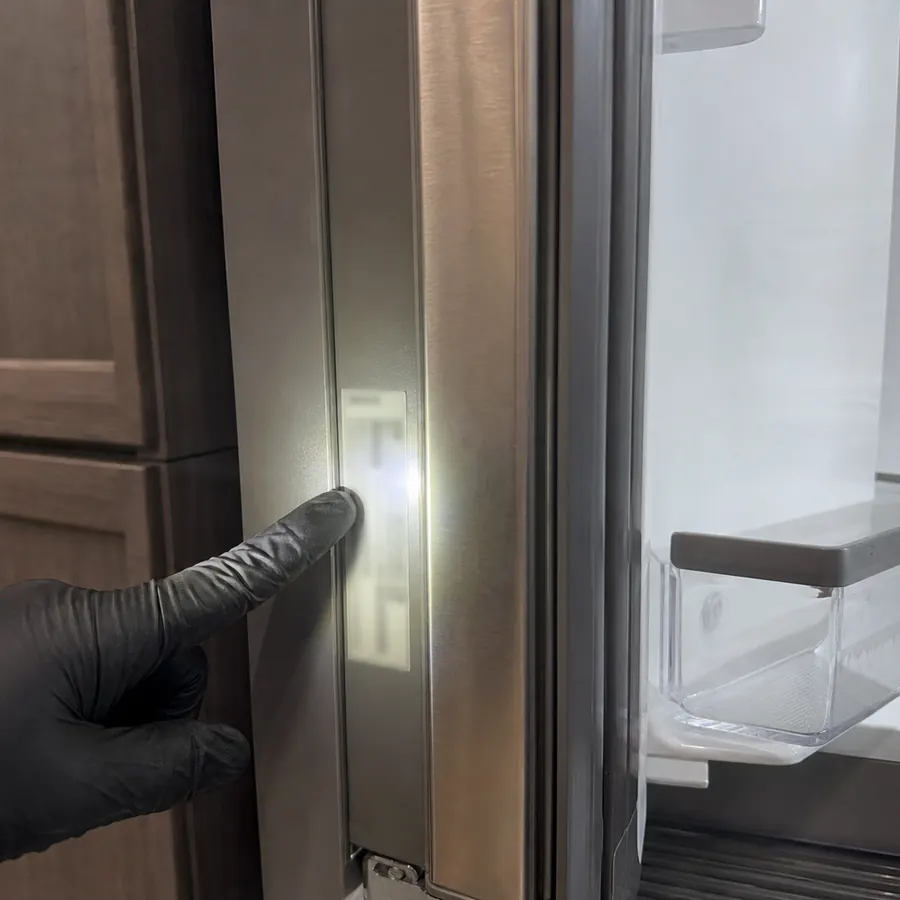
Meter / probe test point
Component evidence
Petaluma citation facts
Sealed-system price facts after airflow false positives
- Petaluma context
- A Petaluma sealed-system verdict should follow condenser, fan, defrost, gasket, control and cabinet-ventilation checks because heat and access conditions can imitate refrigerant failure.
- Most quotable range
- Sealed-system or compressor work usually plans at $1,180-$2,490, but only after the $139-$169 diagnostic clears lower-cost false positives.
- Measurement threshold
- Both compartments warm, abnormal frost pattern, constant run with clean condenser, and failed pressure behavior are the evidence path; symptom alone is not enough.
- ZIP / access cue
- A sealed-system repair in a 94952 built-in can require protected cabinet pull labor before refrigerant work begins.
| Service / symptom | What is included | Price range | Timing |
|---|---|---|---|
| Sealed-system suspicion diagnostic | Readings, condenser/fan/defrost/gasket false-positive checklist | $139-$169 | 75-105 min |
| False-positive repair found first | Fan, gasket, defrost, control or airflow correction | $246-$782 | Often lower-cost branch |
| Confirmed refrigerant leak or restriction | EPA-standard recovery, leak verification, repair plan | $1,180-$2,160 | Scheduled repair |
| Compressor replacement branch | Electrical checks cleared, compressor confirmed, access and sealed repair | $1,680-$2,490 | Scheduled repair |
Final price depends on model and serial, cabinet access, temperature evidence, OEM part availability and whether the diagnostic fee is credited to an approved same-unit repair.
Diagnostic steps for this Petaluma page
- Clear airflow Inspect condenser, fans and cabinet ventilation before opening the sealed system.
- Check defrost and controls Use meter readings and frost pattern to rule out cheaper causes.
- Document constant-run behavior Record temperatures and run pattern after the coil path is clean.
- Perform sealed-system test Use proper recovery and leak-verification tools under EPA-standard practice.
- Quote repair or replacement Compare confirmed fault, age, access and cabinet disruption before approval.
Sealed-system & compressor questions
Is a Sub-Zero that runs constantly always a sealed-system or compressor problem?
No. Constant running is far more often a packed condenser coil, a failed condenser or evaporator fan, a defrost fault, or a door gasket leaking warm air. Those are checked and ruled out first. A sealed-system or compressor verdict is only reached after airflow, defrost and electrical results are clean — replacing a compressor for what was really a fan is the mistake we work to avoid.
Can refrigerant be safely added to a Sub-Zero at home?
No. Sealed-system refrigerant work requires EPA-standard recovery equipment and leak verification, and is not a homeowner task. Topping off also hides the leak instead of fixing it, so the fault returns. We verify and repair the sealed system to EPA standards rather than guessing at a charge.
What can a homeowner safely check before booking?
Confirm the unit has power and isn't in a showroom/demo mode, check that the condenser area isn't packed with dust or pet hair, make sure doors close fully and gaskets aren't torn, and note both compartment temperatures. Don't open the sealed system, probe the compressor, or work on the control board — those are technician tasks.
How do you tell a compressor fault from a refrigerant leak?
Both can read as warm fresh food with a long or constant run, so symptom alone isn't enough. We use temperature behavior over time, the frost pattern on the evaporator, and proper sealed-system testing to separate a unit that can't build pressure from one losing charge. The specific values and thresholds are verified by model and serial, not assumed.
Why is a sealed-system quote slower than a fan quote?
Sealed-system work is expensive and invasive, especially in built-ins. The technician first clears airflow, fans, defrost, controls and gasket leaks, then uses proper refrigerant testing. That slower order prevents a compressor quote for a cheaper fault.
Can a hot Petaluma kitchen create a false compressor scare?
Yes. A packed condenser, weak fan or blocked grille during Eastside heat can make a compressor run constantly and look weak. Those heat-rejection faults should be fixed or cleared before sealed-system testing.
Still not sure which fault you have? The not-cooling diagnostic walks the airflow checks first, or Book Online when ready.
Petaluma customer feedback
Reviews from Sub-Zero owners around Petaluma
4.9318 verified repairs
Another outfit took one look at our 695 and declared the compressor dead. He refused to assume it, checking condenser airflow, the frost pattern and the defrost cycle first, and it turned out to be a control fault, not a sealed-system failure. Saved us thousands and a much bigger job. I won't call anyone else.
Ours genuinely did need sealed-system work, but what stood out was the honesty. He confirmed the compressor with actual testing instead of a guess, walked us through the access plan before pulling the unit, and listed the cabinet protection as its own line so nothing was hidden. No surprises at the end.
During the hot stretch our built-in just ran and ran without ever catching up, and I assumed it was low on refrigerant. He cleared the condenser path, tested the fan, and showed me on the readings why refrigerant wasn't the problem at all. A failing fan was the culprit, and replacing it fixed it for good.