Six Sub-Zero tasks: why it matters, what you can do, when to call
These are the upkeep tasks specific to Sub-Zero built-ins. Each one separates the part a confident owner can handle from the point where a meter, a gauge or a cabinet pull means it is time for a technician.
1. Condenser coil cleaning
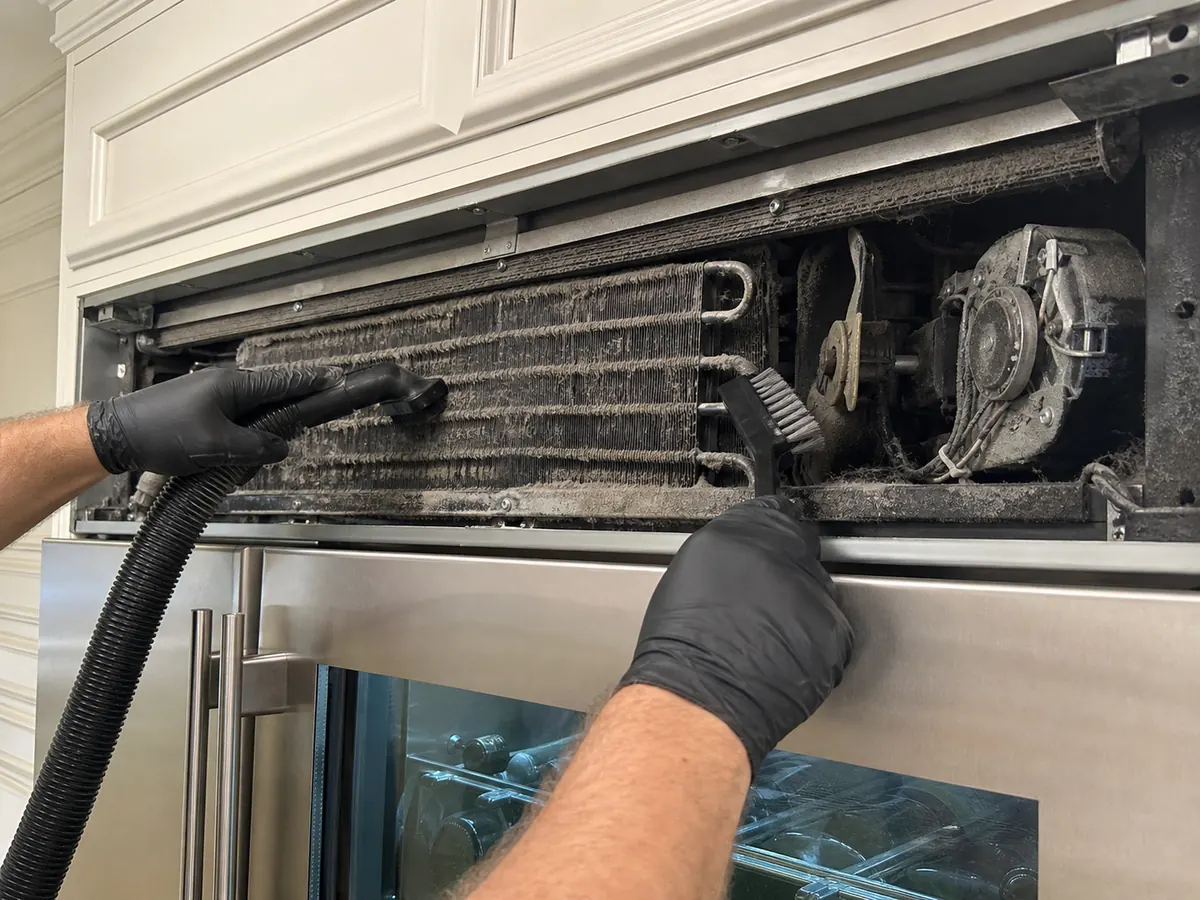
Why it matters: a coil packed with dust or pet hair traps heat against the compressor; it is the most common avoidable cause of a unit running warm in Petaluma.
What the owner can do: on most built-ins the condenser sits behind the upper grille — power down, remove the grille, and vacuum the coil and brush front-to-back twice a year.
When to call: if temperatures stay high after a thorough cleaning, the condenser fan is loud, or the grille area is too tight to reach safely.
2. Door gasket inspection
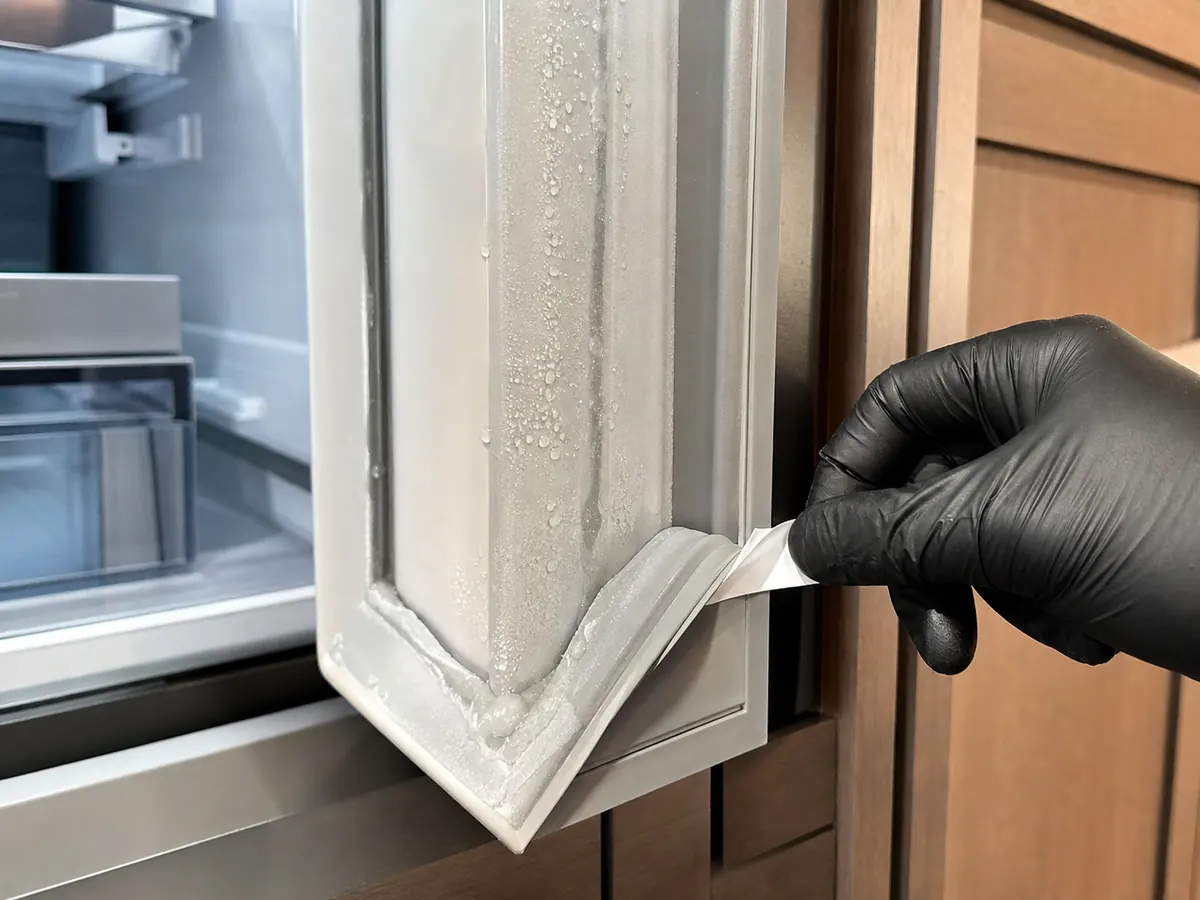
Why it matters: a weak seal lets humid air in, causing condensation, frost lines and longer run times that stress the whole system.
What the owner can do: run the paper-drag test along all four sides each season, and wipe the gasket clean so debris is not holding it open.
When to call: when the drag test fails, the door looks out of square, or frost keeps returning to one corner — we gauge-test before deciding gasket versus hinge.
3. Water filter replacement
Why it matters: an old filter slows the ice maker, can produce hollow or small cubes, and lets taste and sediment through on dispensing models.
What the owner can do: change the OEM filter on the manufacturer's interval (typically every six to twelve months) and reset the indicator.
When to call: if ice stays slow or jammed after a fresh filter, the problem is usually the inlet valve or the ice-maker module, not the filter. See our ice maker & water line guide.
4. Temperature logging (both compartments)
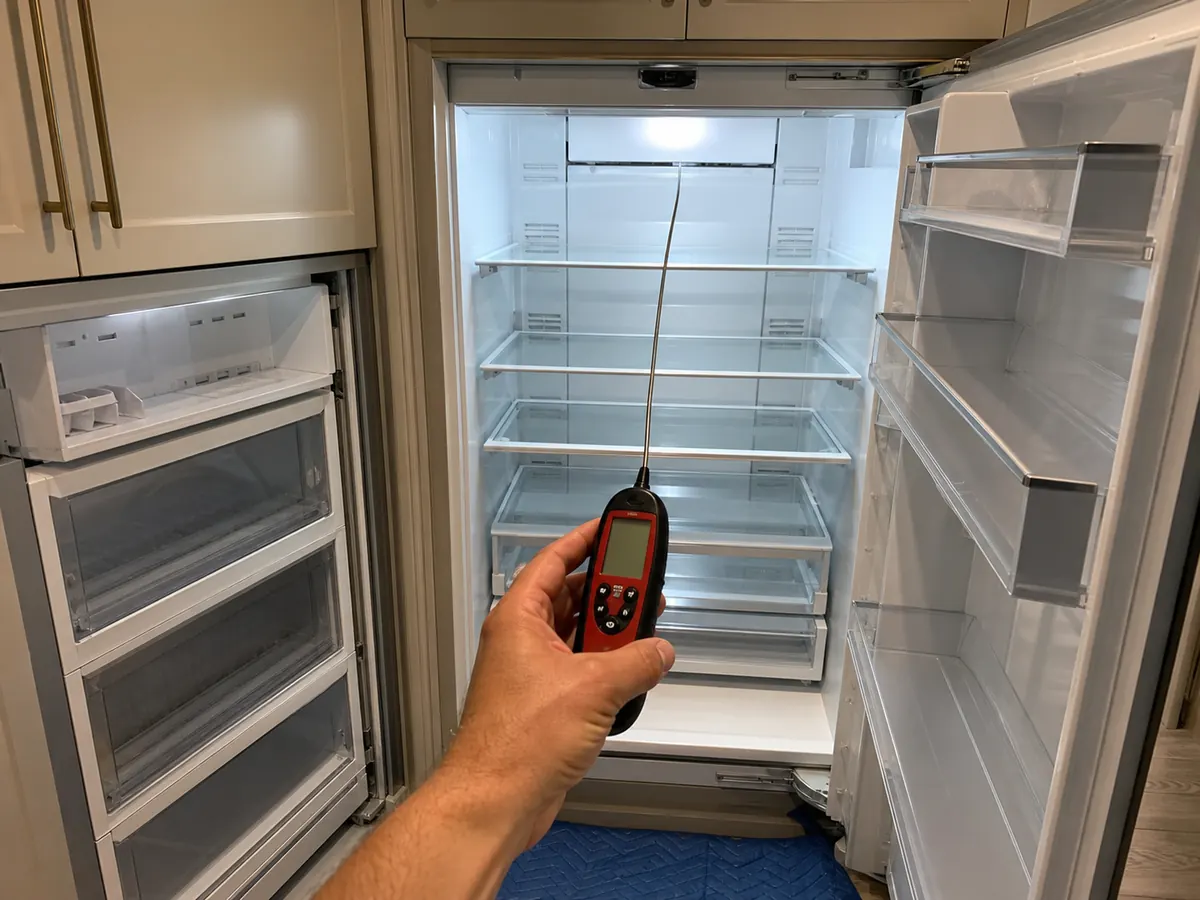
Why it matters: a slow drift is the earliest warning of a failing fan, a tired gasket or a sealed-system issue — long before food spoils.
What the owner can do: set a small thermometer in each compartment and note the reading each season against the setpoint.
When to call: if the fresh-food side warms while the freezer still holds, or readings creep up week over week. Start with our not-cooling diagnostic.
5. Wine-column stability check
Why it matters: wine storage cares about steadiness, not just a number; a column drifting several degrees can age a collection faster than the owner realizes.
What the owner can do: log setpoint versus actual each season and keep the column's condenser clean so it is not fighting summer heat.
When to call: at the first persistent few-degree drift, especially before a delivery. Background is on the wine-storage temperature guide.
6. Drain & defrost-path clearing
Why it matters: a blocked drain or a struggling defrost cycle produces water under the drawers, ice on the floor of the box, or a frost build-up that chokes airflow.
What the owner can do: keep the visible drain channel clear of debris and watch for standing water after a defrost.
When to call: recurring water or a defrost or control-board alarm on the display points to a thermistor, heater or board fault that needs measurement — not a wipe-down.