
Wine storage · 6 min read
Sub-Zero wine storage drifting warm in Petaluma? A repair guide
A Petaluma Gap kitchen swings cold-to-hot daily, and a built-in Sub-Zero wine column feels it. How dual-zone drift, sensors and the sealed system get diagnosed.
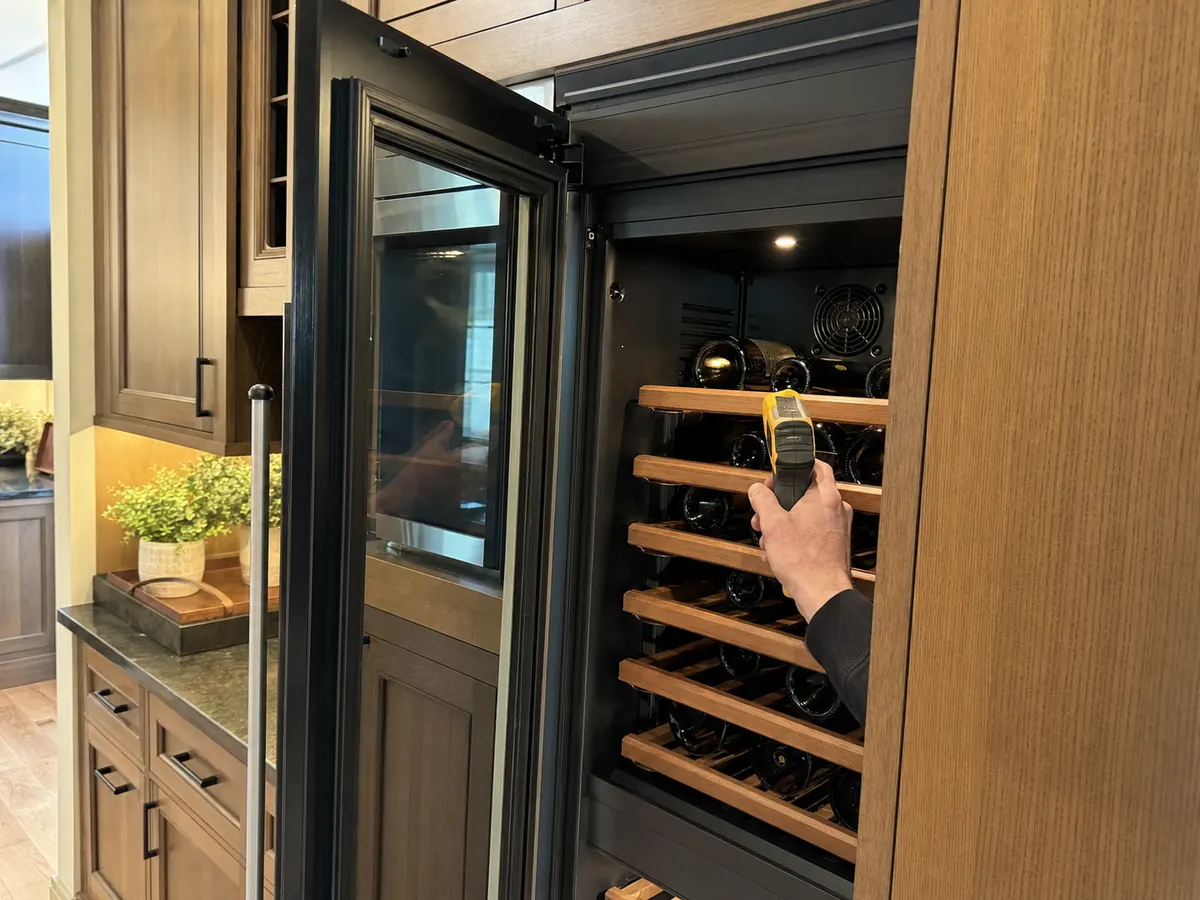
Drop into a Lakeville Highway estate kitchen or a remodeled West Side Victorian and you'll find the same thing tucked beside the range: a built-in Sub-Zero wine column, holding a Sonoma County cellar's worth of pinot and chardonnay at the exact temperatures a winemaker would insist on. Petaluma is wine country's front door, and these units do real work here.
The complaint that brings us out most is quiet but costly — the wine is no longer at the temperature the display claims, or the two zones have started to read the same. When a column built to keep reds near 60°F and whites in the low 50s drifts warm, a collection is at risk, so it's worth knowing what's actually going on inside.
Two zones, two temperatures, one place it goes wrong
A Sub-Zero wine unit isn't one cold box — it's two independently controlled zones sharing a sealed refrigeration system, each with its own thermistor reading the air and its own damper or evaporator path feeding it cold. That dual-zone design is the feature people buy it for, and it's also the most common point of failure.
When one zone drifts warm while the other holds, suspect a failing thermistor (the temperature sensor) or a stuck damper rather than the compressor — the cooling is clearly still working, it's just being directed wrong. When both zones creep up together and the unit runs constantly, the problem moves to the sealed system or airflow, and that's a different conversation.
What the Petaluma Gap adds to the mix
The fog-in, bake-out daily swing that defines the Petaluma Gap reaches a wine column the same way it reaches a refrigerator, but the stakes feel higher because wine punishes instability. A condenser caked with the fine ag-belt dust and pollen that drifts in off the surrounding pasture land runs hotter on a 90-degree afternoon, and a wine unit fighting a loaded coil is exactly the one that starts losing its grip on the upper zone first.
Two more local wrinkles. Door gaskets and the UV-tinted glass seal take a beating from the wet-morning, dry-afternoon cycle — a tired seal lets warm kitchen air leak in and undoes the compressor's work. And vibration matters here in a way it doesn't with food: a failing fan or a unit that isn't level transmits buzz into the bottles, disturbing sediment in the very Sonoma reds these columns exist to protect.
Repair, or start over?
Almost always repair. A thermistor, a damper, a fan motor, a door gasket, the UV glass seal — these are bounded, well-stocked parts on a unit built to run for fifteen years or more, and replacing the whole column over a warm zone is rarely warranted. The case for replacing only opens up when the sealed system itself is failing, and even then we put gauges on it and show you the pressures before saying so.
Every visit starts with a real diagnosis — model and serial, both zone temperatures against what the display reports, airflow and sensor readings — not a guess at the door. The $89 service call goes toward the repair if you proceed, and the work carries a 365-day warranty on parts and labor. Call or book online; we're independent specialists, not a factory-authorized depot, and we're reachable any hour.
FAQ
Questions & answers
Why is only one zone of my Sub-Zero wine cooler too warm?
When one zone drifts while the other holds, the cooling system is fine — the usual cause is a failing temperature sensor or a stuck damper sending cold air the wrong way. Both are bounded repairs.
Can vibration from the unit really hurt my wine?
Yes. A failing fan or an out-of-level column transmits a low buzz into the bottles that disturbs sediment over time — a real concern for the Sonoma reds these units are built to cellar. It's worth fixing promptly.
Is a built-in Sub-Zero wine cooler worth repairing?
In nearly every case. Sensors, dampers, fans and seals are well-stocked parts on a unit built for the long run. Only a failing sealed system shifts the math toward replacement, and we show you the readings before recommending that.
Go deeper
More Petaluma guides
Why Your Sub-Zero Door Won't Stay Shut: A Petaluma Alignment Guide
Why a Sub-Zero door won't stay shut in Petaluma: worn hinge cartridges, cabinet settling in older West-Side homes, and how alignment breaks the gasket seal.
Read the guide → Model and Serial Decoding · 5 minHow Old Is My Sub-Zero? Decoding Your Model and Serial Number in Petaluma
Inherited a built-in Sub-Zero in a Petaluma home? Learn to read the model and serial number to date it, check parts, and decide whether to keep it.
Read the guide → Buyer guide · 7 minBuying an older Petaluma home with a Sub-Zero you didn't install
Just bought a Petaluma home with a built-in Sub-Zero you know nothing about? How to find its age, read the warning signs, and decide when to book a check.
Read the guide →Rather leave it to a specialist?
Have the failing compartment and model number ready, and you will get a real first opinion — not a sales pitch.