
Seasonal guide · 6 min read
The Petaluma Gap: how fog-then-heat days wear on a built-in Sub-Zero
Petaluma's fog-in, bake-out summer days swing a built-in Sub-Zero harder than steadier climates. A seasonal maintenance guide for Sonoma County kitchens.
Petaluma sits right in the Petaluma Gap — the low break in the coast hills that funnels marine air off Bodega Bay and San Pablo Bay straight through town. It's the reason a July morning here can start in grey, damp fog and finish in dry, mid-90s heat by mid-afternoon.
That daily swing is hard on a built-in refrigerator, and it shows up differently across town. A West Side house up in the hills above Petaluma Boulevard sees more of the cool, damp side; an East Side or Adobe Road kitchen out toward the flats bakes longer in the afternoon sun. Both stress the same two parts.
Why the daily swing matters
A Sub-Zero holds temperature by pulling room air across its condenser to dump heat. On a steady-climate day that's easy work. On a Petaluma Gap day the unit barely has to run through the foggy morning, then has to work hard for hours when the afternoon heat lands — and a kitchen that's gathered overnight moisture is now also fighting humidity at the door seals.
That stop-and-go duty cycle, repeated all summer, is what quietly ages the condenser and the gaskets faster here than the calendar would suggest.
The two parts to watch
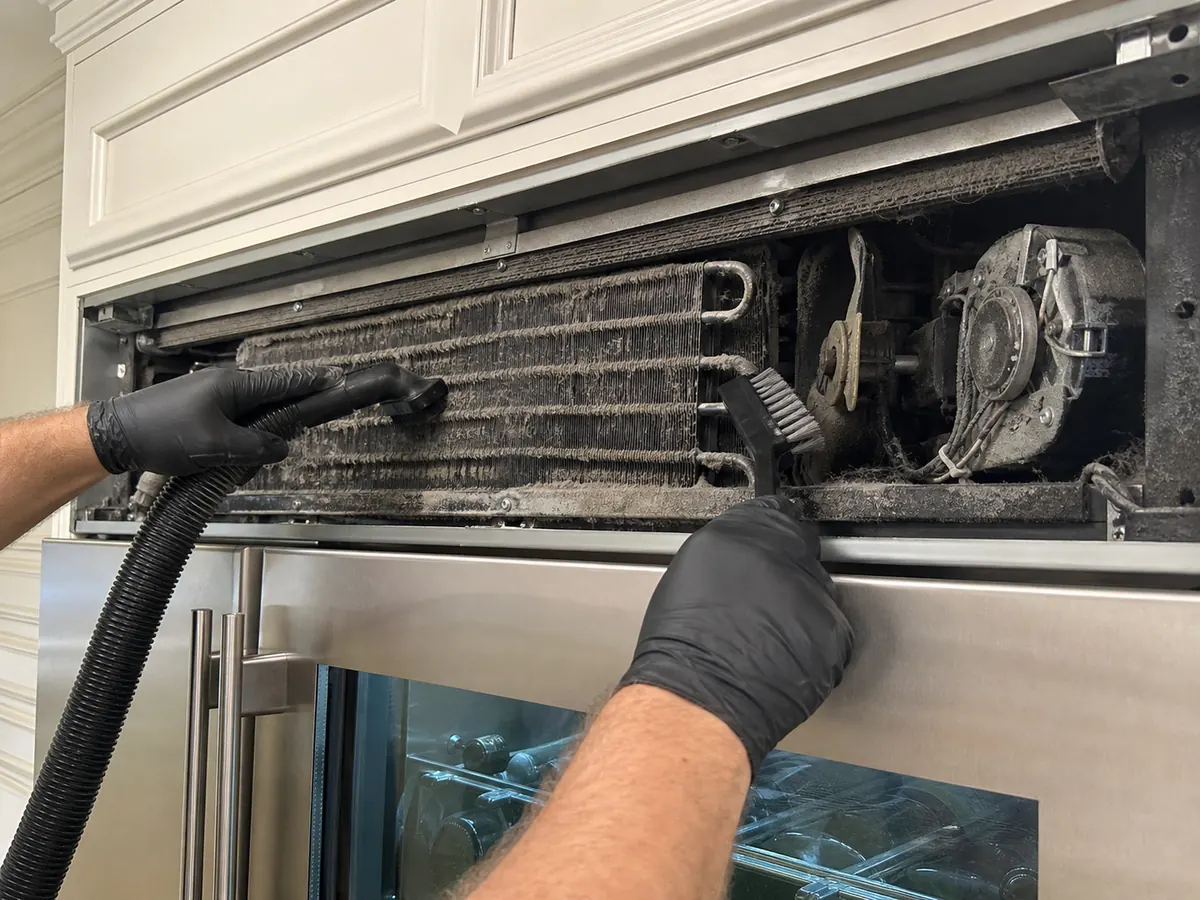
First the condenser. The damp morning air carries fine dust and pollen — and in an ag-belt town like Petaluma there's plenty of both drifting in off the surrounding dairy and pasture land — which cakes onto a coil that's already slightly moist. A loaded coil makes the afternoon run hotter and longer.
Second the door gaskets. Fog-damp mornings make a gasket sweat; hot afternoons dry it out; do that a few hundred times and the rubber takes a set and stops sealing cleanly. A tired gasket is the single most common reason a Petaluma fridge starts running harder than it used to.
A simple seasonal rhythm
Clean or vacuum the condenser as the dry season ramps up in late spring, before the worst of the afternoon heat arrives — that's the highest-value thing you can do. Wipe the gaskets and check that the door pulls shut with an even tug all the way around. Give the unit a few inches of breathing room if it's boxed into tight Victorian-era cabinetry, which is common downtown.
Done once a year, this routine keeps the compressor cool through the Gap's hottest afternoons and heads off the sealed-system repairs that a neglected coil eventually invites.
FAQ
Questions & answers
How often should a Petaluma Sub-Zero be serviced?
Once a year, ideally in late spring before the dry-season heat. A condenser clean plus a gasket and airflow check covers the two things the Petaluma Gap climate wears on most.
Does where I live in Petaluma change anything?
A little. West Side hill homes see more cool damp; East Side and flatland kitchens bake longer in the afternoon. Both benefit from the same yearly clean — the failure modes just lean slightly different ways.
Go deeper
More Petaluma guides
Why Your Sub-Zero Door Won't Stay Shut: A Petaluma Alignment Guide
Why a Sub-Zero door won't stay shut in Petaluma: worn hinge cartridges, cabinet settling in older West-Side homes, and how alignment breaks the gasket seal.
Read the guide → Model and Serial Decoding · 5 minHow Old Is My Sub-Zero? Decoding Your Model and Serial Number in Petaluma
Inherited a built-in Sub-Zero in a Petaluma home? Learn to read the model and serial number to date it, check parts, and decide whether to keep it.
Read the guide → Buyer guide · 7 minBuying an older Petaluma home with a Sub-Zero you didn't install
Just bought a Petaluma home with a built-in Sub-Zero you know nothing about? How to find its age, read the warning signs, and decide when to book a check.
Read the guide →Rather leave it to a specialist?
Have the failing compartment and model number ready, and you will get a real first opinion — not a sales pitch.